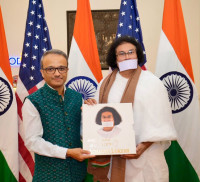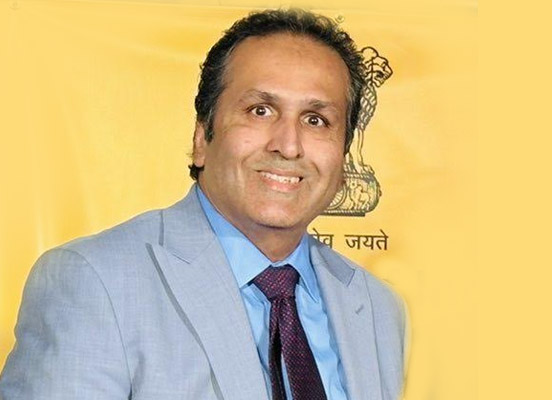
Ajay Bhutoria, a prominent Indian-American community leader and former advisor to President Biden, has called on California Governor Gavin Newsom to veto Senate Bill 509 (SB 509), a measure requiring specialized law enforcement training on transnational repression (TNR) by January 1, 2027. In a detailed letter sent on September 19, 2025, Bhutoria argues that the bill is redundant, fiscally irresponsible, and risks profiling Indian-American communities, particularly Hindus, while deepening divisions within California’s diverse diaspora.
SB 509, which passed the California State Legislature with unanimous Senate support in June 2025 and Assembly approval in September 2025, aims to train law enforcement to recognize and respond to transnational repression—defined as efforts by foreign governments to intimidate or silence diaspora communities. Supporters, including the Sikh Coalition and Immigrant Defense Advocates, emphasize the bill’s role in protecting communities like Sikh Americans from documented threats, such as the 2023 assassination of Sikh leader Hardeep Singh Nijjar in Canada. However, critics, including Hindu American advocacy groups like the Hindu American Foundation (HAF) and the Coalition of Hindus of North America (CoHNA), argue that the bill’s vague language could lead to misapplication and bias against certain communities.
Bhutoria, leveraging his experience as a former Deputy National Finance Chair for the Democratic National Committee and his success in convincing Newsom to veto the controversial SB 403 caste bill in 2023, highlights several concerns. He argues that SB 509 duplicates existing federal frameworks, such as the FBI’s Counterintelligence Program and the Foreign Agents Registration Act (FARA), which already address TNR through joint task forces and legal mechanisms. He also notes that California’s Emergency Services Act empowers local authorities to handle such threats, rendering the bill unnecessary. “This is a costly solution in search of a problem,” Bhutoria wrote, pointing to the absence of FBI-documented TNR cases specific to California requiring state-level intervention.
In a year marked by a $12 billion state budget deficit, Bhutoria warns that the bill’s training requirements would divert resources from pressing priorities, such as combating hate crimes against Indian Americans. He cites four recent vandalism incidents targeting Hindu temples in the Bay Area as evidence of more urgent needs. Additionally, Bhutoria expresses concern that SB 509’s broad definition of TNR—encompassing “intimidation, silence, coerce, or harm” via “digital or physical means”—lacks safeguards, potentially chilling First and Fourteenth Amendment rights by profiling Indian Americans as foreign agents during cultural or policy advocacy.
Echoing Newsom’s veto of SB 403, which was criticized for risking community division, Bhutoria warns that SB 509 could exacerbate tensions between Sikh and Hindu communities by prioritizing one narrative over others. “This bill threatens to fracture our diaspora,” he wrote, urging Newsom to reject it to uphold his commitment to inclusive governance.
Newsom, who is currently reviewing over 800 bills before the October 13, 2025, veto deadline, has a history of rejecting legislation deemed redundant or divisive, including SB 936 (2024), SB 1220 (2024), and SB 1047 (2024). Bhutoria’s letter appeals to this precedent, emphasizing fiscal prudence and equitable policy. As California’s 1.2 million-strong Indian-American community awaits Newsom’s decision, the debate over SB 509 underscores the delicate balance between protecting diaspora communities and fostering unity in a diverse state.