Milestones across communities, boardrooms, and ballots
Community Festivals Flourished
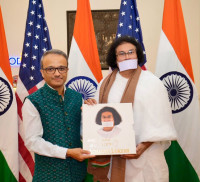
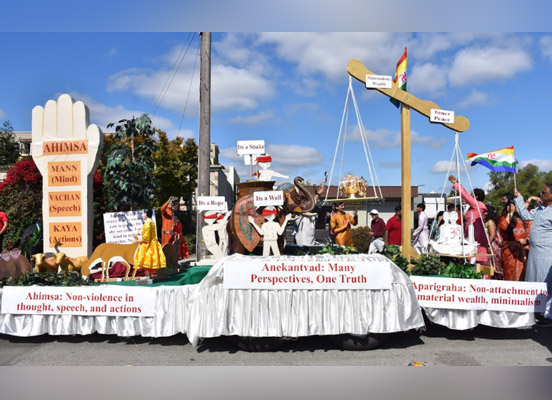
Be it the historic 43rd India Day Parade hosted by FIA-NY-NJ-CT-NE in association with the Indian Consulate in New York, or the landmark Festival of India series in Georgia, Indian American communities across the United States organized an impressive array of cultural, civic, and service-oriented events that highlighted heritage, unity, and community engagement.
The India American Cultural Association (IACA) marked its 29th Annual Festival of India in Georgia, drawing over 4,000 attendees with music, dance, food, and educational activities celebrating India’s heritage. In Maryland, the Festival of India grew into one of the state’s largest Indian cultural events, featuring hundreds of performers and earning recognition from local officials.
Literary and artistic expression shone at the IAAC Literary Festival 2025 in New York City, hosted by the Indo-American Arts Council. This two-day event showcased prominent authors, poets, and thinkers, offering panels and performances that bridged South Asian and American literary worlds. The same organization’s Erasing Borders Dance Festival brought classical Indian dance to U.S. audiences, deepening appreciation for performing arts.
Civic and social impact gatherings also energized the diaspora. The Indiaspora US Forum 2025 in San Francisco convened diaspora leaders to focus on civic engagement and social impact, fostering collaboration and networking among professionals. Meanwhile, the Indian Association of Greater Boston held its Republic Day Mela with cultural programs and community collaborations, reinforcing heritage among New England’s Indian Americans.
Local associations contributed through grassroots events as well. The Association of Indo Americans (AIA) hosted “Giving Back to the Local Community Together” in Fremont, uniting volunteers and leaders in service, while various Indian American associations celebrated Indian Independence Day with vibrant cultural programs reflecting regional pride and unity.
---------------------------------------------------------------
Major Visa Processing Delays and Backlogs
In late 2025, U.S. consulates in India abruptly cancelled or rescheduled thousands of H-1B and H-4 visa interviews, pushing appointments into spring or late 2026. This left many Indian professionals — including those already employed in the U.S. — stranded in India without valid visa stamps, unable to return to their jobs. These delays stemmed from expanded vetting procedures, including stricter social media checks.
Under new policy shifts in 2025, the U.S. replaced the traditional H-1B lottery with a skills- and salary-based selection system and faced legal challenges over a $100,000 visa fee imposed on new H-1B petitions. These changes added cost and uncertainty for employers and applicants alike.
Heightened immigration enforcement, travel risks, and fears of regulatory scrutiny weighed heavily on visa holders and dependents. Some individuals reported receiving deportation notices within their legal 60-day grace period, underscoring anxiety about compliance and status maintenance.
In summary, 2025 brought significant H-1B challenges for Indian Americans — from systemic visa delays and enhanced scrutiny to evolving policy frameworks — impacting careers, families, and long-term immigration aspirations.
---------------------------------------------------------------
.jpg)
Chandrika and Ranjan Tandon (Photo courtesy: engineering.nyc.edu)
Landmark Philanthropy
In 2025, Indian-American alumni and philanthropists continued to make notable contributions to their alma maters in India and U.S. higher education, reinforcing their long-standing commitment to educational excellence, innovation, and cultural exchange. According to research compiled by Indiaspora, Indian Americans have now donated over $3 billion to U.S. universities since 2008, supporting research, infrastructure, scholarships, and cultural programs that benefit students of all backgrounds.
Among the major gifts highlighted in 2025, Chandrika and Ranjan Tandon stand out for their landmark $100 million contribution to New York University’s School of Engineering, one of the largest gifts made by Indian-American donors, which helped advance engineering research and student opportunities.
Former PepsiCo CEO Indra Nooyi also continued her legacy of giving with a $50 million donation to Yale School of Management, significantly strengthening business education and leadership development.
Other prominent contributors include Sumir Chadha, whose funding helped establish the Chadha Center for Global India at Princeton University, and Monte Ahuja, Satish and Yasmin Gupta, and Kiran and Pallavi Patel, whose gifts have shaped programs in medical, engineering, and educational fields across institutions in Ohio, Texas, and Florida.
---------------------------------------------------------------
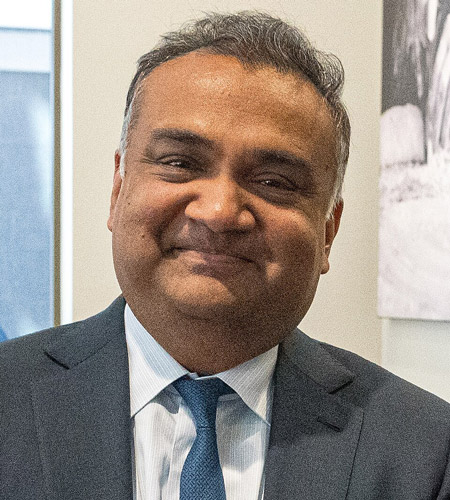
YouTube head honcho Neal Mohan was named TIME CEO of Year 2025. (Photo courtesy: Wikimedia)
Helming US Corporates
In 2025, Indian Americans and Indian-origin professionals continued to ascend to top leadership roles across major U.S. and global corporations — underscoring their growing influence in international business.
One of the standout appointments was Srinivas “Srini” Gopalan, who became Chief Executive Officer of T-Mobile US effective November 1, 2025. Gopalan, an Indian-origin executive with extensive telecom and global leadership experience, succeeded Mike Sievert and took the helm of one of America’s leading wireless carriers.
Similarly, Rahul Goyal was appointed CEO of Molson Coors Beverage Company in October 2025, marking another significant Indian-origin leadership milestone in the U.S. corporate landscape.
At Apple Inc., Kevan Parekh stepped into the role of Chief Financial Officer in the start of 2025, joining the company’s top leadership team and steering financial strategy at one of the world’s most valuable technology firms.
Another major corporate leadership change saw Sabih Khan assume the role of Chief Operating Officer at Apple in mid-2025, overseeing the company’s global operations following the retirement of his predecessor.
Beyond these roles, Indian-American leaders like Vimal Kapur continued as CEO of Honeywell, exemplifying sustained representation at the helm of Fortune-level companies.
Neal Mohan, who heads YouTube was recognized as CEO of the Year 2025 by TIME. Mohan previously worked at Microsoft and Google. He joined YouTube in 2015. He is also on the boards of Starbucks and 23andMe.
Looking ahead to early 2026, Kruti Patel Goyal was named next CEO of Etsy, reflecting continued momentum in leadership transitions involving Indian-origin talent.
---------------------------------------------------------------
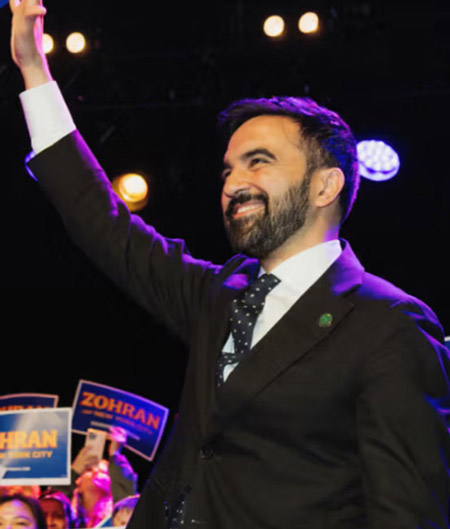
Zohran Mamdani became first South Asian and Muslim to lead nations’ largest city. (Photo courtesy: www.transition2025.com)
Winning Historic Elections
Indian Americans made significant strides in U.S. local, state, and municipal elections, marking one of the most impactful years for political representation in recent history. Their victories spanned major cities, state offices, and legislative bodies, reflecting rising civic engagement and influence.
A historic highlight was Zohran Mamdani’s election as Mayor of New York City, where he became the first South Asian and Muslim to lead the nation’s largest city. Mamdani’s victory marked a milestone in American politics, underscoring growing diversity in urban leadership and signaling broad support for progressive platforms among a diverse electorate.
At the state level, Ghazala Hashmi won the Lieutenant Governor race in Virginia, becoming the first Indian American and first Muslim woman to hold statewide office there. Her triumph represents a breakthrough for Indian-American representation in higher state government and highlights expanding opportunities for South Asian leaders on the national stage.
In Ohio, Aftab Pureval secured re-election as Mayor of Cincinnati, reinforcing his position as a leading Indian-American political figure with a focus on inclusive economic growth and civic improvement.
Other notable local wins included multiple Indian-American city council members and municipal leaders elected in states such as Texas and North Carolina, further illustrating broad geographic representation. Additionally, at the state legislative level, Indian Americans continued to secure seats in bodies such as the Virginia General Assembly, where leaders like Kannan Srinivasan and J.J. Singh strengthened representation in state lawmaking.