By Saima Afzal
The two-week ceasefire between the United States and Iran, announced at the eleventh hour, is less a diplomatic breakthrough than a temporary pause imposed on a crisis that was slipping beyond control. It reflects not resolution, but restraint-an effort by all sides to step back from a trajectory that was rapidly narrowing the space for political decision-making.
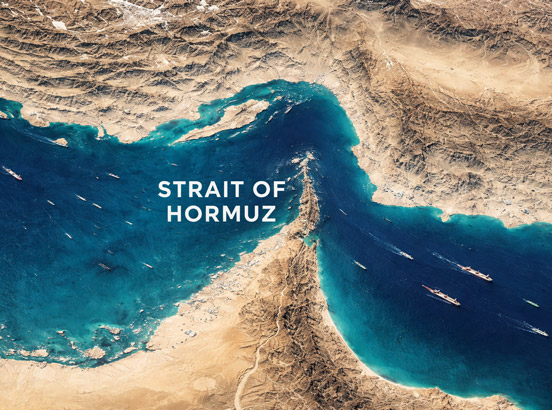
The timing of the truce is revealing. Just hours before agreeing to pause escalation, President Donald Trump had warned of catastrophic consequences if Iran did not reopen the Strait of Hormuz. Tehran, for its part, had already demonstrated its capacity to impose global economic pressure by disrupting one of the world’s most critical energy chokepoints, through which roughly a fifth of global oil supply transits.
Israel’s parallel military pressure further reinforced Tehran’s perception of a coordinated threat. The ceasefire emerged not from alignment, but from a shared recognition that continued escalation risked consequences neither side could fully contain.
What stands out in this episode is how quickly events escalated. Within weeks, the conflict moved from limited strikes to threats against civilian infrastructure. The pace of escalation reduced the margin for diplomacy to intervene in a structured way.
Instead, negotiations were forced into a reactive mode, attempting to catch up with events rather than shape them. The ceasefire is better understood as a pause imposed by necessity rather than a product of deliberate conflict resolution.
At the centre of the crisis is the Strait of Hormuz, which has shifted from a background feature of global energy security to a primary instrument of leverage.
Iran’s ability to close, and then conditionally reopen, the waterway has altered the negotiating baseline. Control over maritime access is no longer just a military question; it has become a bargaining tool with direct implications for global markets, with immediate spillover into energy prices, insurance costs and shipping risk.
Early indications suggest Tehran seeks to convert short-term leverage into longer-term strategic gain. For Washington and its regional partners, including Israel, this presents a structural dilemma. Accepting such an arrangement risks legitimizing a precedent that could reshape norms around freedom of navigation. Rejecting it outright increases the likelihood of renewed confrontation in a domain where the costs are globally distributed.
The temporary reopening of the strait under Iranian coordination resolves the immediate crisis, but leaves the underlying contest unresolved. The reported Iranian proposal, framed as a 10-point plan, should be read in this context. Its elements-sanctions relief, recognition of domestic uranium enrichment, and adjustments to US military posture are expansive, and deliberately so. These are not terms designed for immediate acceptance, but opening positions intended to anchor negotiations.
High-anchor bargaining has become a defining feature of contemporary crisis diplomacy, where maximalist demands shape the eventual compromise rather than determine it outright.
Domestic politics in the United States further complicate the picture. While the ceasefire has been broadly welcomed as a step away from wider war, it has also exposed deep divisions in Washington. Republican figures, including Lindsey Graham, have expressed cautious support for diplomacy. At the same time, Democratic lawmakers such as Chris Murphy and Alexandria Ocasio-Cortez have focused on the legality of the conflict, questioning the lack of congressional authorization.
This dual pressure reveals a structural contradiction in US foreign policy: the executive can initiate conflict at speed, but lacks the political bandwidth to sustain either escalation or compromise, caught between strategic necessity abroad and political contestation at home.
An equally important dimension of this episode is the role of external actors. The ceasefire was facilitated through intermediaries, with Pakistan playing a visible role in bringing both sides to the table. More significantly, the United States itself acknowledged that China had encouraged Iran to engage in negotiations.
China’s role does not amount to formal mediation, but it reflects influence at a critical moment. As Iran’s largest trading partner, Beijing holds economic leverage that can be translated into diplomatic pressure. By signalling support for de-escalation, China positioned itself as a stabilising actor without assuming the risks associated with direct intervention. For Washington to acknowledge this publicly underscores a changing balance of diplomatic influence.
What is emerging is a more distributed model of crisis management, one in which the United States no longer monopolizes escalation control and where actors such as China can shape outcomes without formally entering the negotiating framework. For regional players such as Pakistan, this creates space to act as facilitators. For global powers, it offers a way to influence outcomes while limiting exposure.
Yet the ceasefire remains inherently fragile. It addresses the immediate symptoms of the confrontation, escalation and economic disruption without resolving its causes.
The fundamental disagreements over sanctions, nuclear activity, regional military presence, and maritime control persist. The two-week timeframe creates space for diplomacy, but also imposes pressure. If negotiations fail to produce tangible progress, the conflict could resume under conditions of heightened mistrust.
There is also the question of credibility. Public threats, rapid escalation, and equally rapid de-escalation risk eroding the reliability of commitments on both sides. For diplomacy to move beyond crisis management, it will require not only negotiated terms but mechanisms that both parties consider enforceable.
The current truce, then, is not a turning point so much as an interruption. It buys time, reduces immediate risk, and opens a channel for negotiation. Whether that time is used effectively remains uncertain. What this episode makes clear is that in contemporary conflicts, escalation is increasingly easy to initiate but far harder to control—leaving diplomacy to function not as a pathway to resolution, but as a mechanism for preventing escalation from tipping into wider conflict.
(Saima Afzal is an independent and freelance researcher specializing in South Asian security, counter-terrorism, the Middle East, Afghanistan, and the Indo-Pacific region.)
The views expressed are not necessarily those of The South Asian Times