The Donald Trump administration has asked Congress to approve an additional $87.6 billion in funding, with the bulk of the request tied to the ongoing Iran war, setting up another confrontation with lawmakers increasingly uneasy about the conflict.
The supplemental request, submitted to Congress and published by the White House, includes $67.15 billion for defense spending. This comes on top of nearly $1 trillion already approved last year and another $1.5 trillion the administration is seeking for the next fiscal cycle.
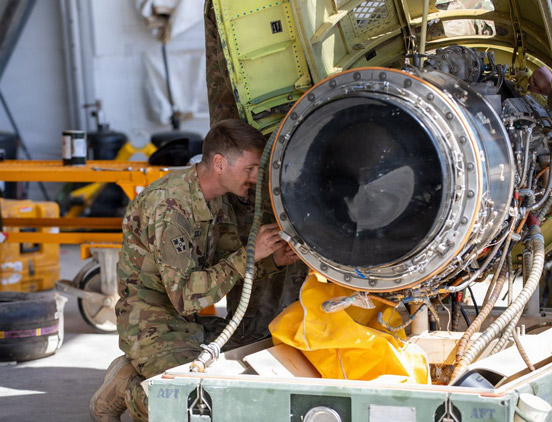
According to the White House, the additional military funding would cover operational costs linked to the war, military readiness, replenishment of weapons stockpiles, and classified defence programmes. Of the total, $21 billion has been earmarked for munitions procurement, strengthening domestic defence production, and supporting critical military capabilities.
The development comes as the Senate recently passed a War Powers Resolution directing Trump to halt military action against Iran, weeks after a similar measure cleared the House. A small group of Republicans joined Democrats in backing the move.
Lawmakers from both parties have criticised the administration for not adequately briefing Congress on the conflict and questioned whether executive actions have bypassed constitutional limits on war powers.
Allies disappointed US: Trump to NATO chiefPresident Donald Trump has told NATO Secretary-General Mark Rutte that European allies had disappointed the United States during the Iran conflict, expressing frustration over what he described as inadequate support from key NATO partners during the conflict. During their meeting, Trump said he was disappointed with Italy, the United Kingdom, Germany and France, and also criticized Spain. “We were let down,” Trump said, adding that the level of assistance provided by allies fell short of expectations during a major security crisis. “If anybody else were in that position, we would not even be meeting today with you,” Trump said, suggesting that stronger allied backing would normally have been expected. He added that it would have been better if partners had explicitly offered help during the conflict. |