Clean air must be treated as a determinant of health, not merely a regulatory goal.
By Sahil Parmar, Shreya Anjali & Sneha Chetri
When the air we breathe becomes the enemy, the cost is measured not in smoggy skylines but in shortened lives. Two major studies this year, the Air Quality Life Index (AQLI) released by the University of Chicago in August and the State of Global Air 2025 (SoGA) report by the Health Effects Institute in October, have laid bare India’s gravest public health crisis.
According to the AQLI, residents of Delhi-NCR are losing 8.2 years of life expectancy due to air pollution, the highest in the world. The SoGA 2025 report further estimates that in 2023, nearly two million deaths in India were attributable to air pollution, nine in ten linked to non-communicable diseases (NCDs) such as heart disease, stroke, diabetes, and lung cancer.
This is not a seasonal irritation or an urban inconvenience. It is a slow-motion public health disaster. And the tragedy is that India has begun to adjust to it.
Pollution: India’s new public health enemy #1
For decades, India’s health challenges were defined by undernutrition, unsafe water and communicable diseases. But the 2025 findings make one truth impossible to ignore: air pollution now shortens Indian lives more than any other health threat. Fine particulate matter (PM2.5), smaller than one-thirtieth the width of a human hair, infiltrates the lungs, bloodstream, and even the brain, triggering inflammation, chronic respiratory illness, strokes, and cognitive decline.
The SoGA report confirms that South and Central Asia remain the world’s most polluted regions, with India among the worst in annual PM2.5 exposure. The invisible pollutants in our air are reshaping India’s disease profile, driving up hypertension and respiratory illnesses even among the young. Yet, public discourse still treats pollution as an “environmental” issue to be managed by pollution boards, not as a health emergency demanding systemic response.
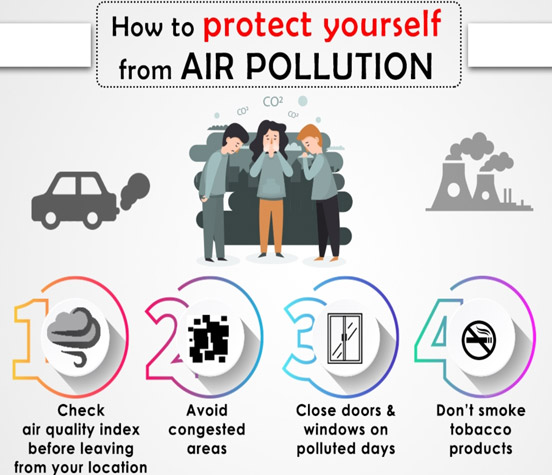
(Infographics courtesy: X@NPCCHH)
A crisis of inequality
The burden of toxic air is profoundly unequal. Children, women, and the elderly face the sharpest consequences: children because of developing lungs, women due to indoor smoke exposure, and elders owing to existing NCDs. In Delhi, Lucknow, and Patna, PM2.5 levels exceed WHO limits by 10 to 15 times, while rural households continue to rely on biomass fuels for cooking.
Behind each statistic lies a personal tragedy: a child who wheezes through winter, a worker too ill to earn, an elderly parent gasping for breath. Pollution has become the invisible thread linking India’s health, inequality, and productivity crises.
Delhi’s development paradox
Nowhere is the contradiction starker than in the national capital. Delhi’s gleaming metro, electric buses and fly-overs sit alongside some of the most severely polluted air in the world. For India as a whole, air pollution was linked to an estimated 1.67 million premature deaths in 2019, accounting for nearly 18 % of all deaths. The economic cost that year was estimated at US $36.8 billion, or about 1.4 % of GDP. Meanwhile, industry-facing analyses suggest that the added burden on business via lost productivity and illness could amount to as much as US$95 billion annually, roughly 3 % of GDP.
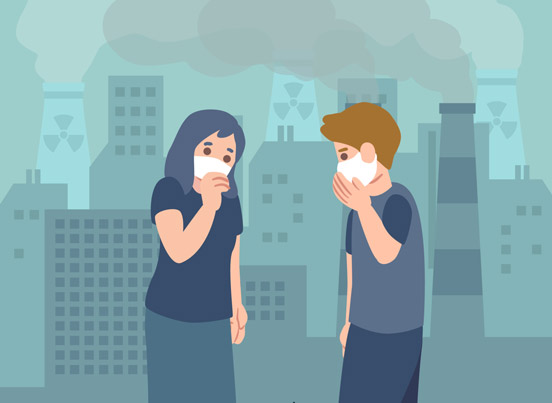
Yet, Delhi has adapted to the intolerable. Masks for children, cancelled morning walks, and packed hospital wards have become seasonal habits. The unthinkable has turned ordinary.
The policy paradox
India’s National Clean Air Programme (NCAP) and state action plans are ambitious on paper but falter in enforcement. Despite a ₹727 crore clean air plan, cities such as Hyderabad have failed to meet PM₁₀ reduction targets. The problem lies in fragmented governance, where the Ministries of Health, Environment, Transport, and Urban Development act in silos and health data rarely inform pollution control strategies.
Clean air must be treated as a determinant of health, not merely a regulatory goal.
A roadmap for breathable future
The SoGA and AQLI reports together call for a fundamental rethinking of India’s clean air agenda. Three shifts are essential:
1. Make air quality part of health governance. Integrate pollution metrics into the National Health Mission’s dashboards and public-health surveillance.
2. Invest in health literacy and risk communication. Equip citizens and community health workers to recognise exposure-related illnesses and demand accountability.
3. Empower cities and citizens. Enable ward-level monitoring, real-time data access and enforceable air-quality targets under NCAP.
Global experience shows that clean-air policies work. In China, a determined “war on pollution” reduced PM2,5 levels by half in just ten years, extending life expectancy in Beijing by nearly two years. Few interventions deliver such swift health dividends, a reality India cannot overlook.
From survival to dignity
The greatest danger is not just the pollution itself, but our acceptance of it. When citizens begin to adapt to the unlivable, policymaking loses urgency. Every breath becomes an act of endurance rather than a right.
A city that silently robs its residents of eight years of life is not livable; it is lethal. Air pollution is no longer an environmental issue; it is a humanitarian crisis camouflaged as normal life.
India’s toxic air is cutting life short, silently and relentlessly. The right to breathe clean air is not a luxury; it is the foundation of dignity, productivity and public health. It is time India cleared the air, not only from its cities, but from its conscience.
(Dr Sahil Parmar (MBBS, MD), Shreya Anjali (MPH), and Sneha Chetri (MPH) are public health professionals at Pahle India Foundation. The views expressed are their own)