
By Vipul Tamhane
On July 4, 2026, India's Ministry of Electronics and Information Technology sent Meta Platforms a notice that, on its face, reads like routine regulatory correspondence, i.e. disable certain advertisements, respond within seven days, explain how the content got through. In substance, it is something considerably more consequential.
The notice followed a BBC investigation that found Instagram's advertising system had approved and served paid advertisements promoting child sexual exploitation and abuse material to Indian users, and that at least one such advertisement continued running even after being flagged, until the BBC itself contacted Meta for comment.
That sequence of facts changes the nature of the problem. This was not a failure to catch something a user posted in a dark corner of the platform. It was a failure inside a system that Meta built, approved, and profited from.
That distinction matters, and it is why this episode deserves to be read not as another skirmish in the long-running feud between New Delhi and Silicon Valley, but as a genuine inflection point in how governments will treat platforms going forward.
A problem of governance, not just content
Most disputes between governments and social media companies revolve around contested terrain: political speech, misinformation, hate speech thresholds, the balance between free expression and public order. Reasonable people disagree about where those lines should sit, and platforms can plausibly claim they are making judgment calls in good faith.
Child sexual abuse material occupies no such contested space. No, there is legit interpretation really, under which such content should even exist, let alone be monetized via a paid advertising pipeline that needs human or automated review before it goes live.
The Indian government’s notice points to potential liability under the Information Technology Act, 2000, plus the IT Rules of 2021 and also the Protection of Children from Sexual Offences Act 2012, and it’s a setup that strips platforms of safe-harbor protection exactly when they don’t act against this sort of harm.
Also, Union IT Minister Ashwini Vaishnaw’s personal intervention, where he summons Meta to signal this is being treated as a ministerial priority, not just routine compliance correspondence.
What makes the case for stronger accountability nearly unanswerable is the advertising layer itself. User-generated content moderation is, everyone concedes, an imperfect science at the scale of billions of daily posts. But paid advertisements pass through a gatekeeping process that platforms themselves design and control.
When that gatekeeping fails on content this categorically illegal, and fails in a manner that generates revenue for the platform before failing, the standard defense - that scale makes perfection impossible - loses most of its force. Regulators are unlikely to accept it, and the public will not accept it either.
Why India, and why now
India is Meta's largest market by user count across Facebook, WhatsApp, and Instagram, which means any serious regulatory confrontation here carries consequences that extend well beyond the domestic market. This is also not India's first friction point with Meta. Disputes over WhatsApp's end-to-end encryption and traceability requirements, data localization mandates, and intermediary liability rules have accumulated over several years into a broader pattern: an Indian regulatory posture that has grown steadily more assertive toward large technology platforms, and steadily less willing to accept self-certification as a substitute for verifiable compliance.
The child-safety dimension gives this particular confrontation unusual political weight. Unlike encryption or data-localization disputes, where platforms can credibly frame their position as protecting user privacy or resisting government overreach, there is no comparable framing available here.
Opposition to stronger child-safety enforcement is, correctly, politically untenable. That asymmetry gives Indian regulators a rare degree of latitude to press harder than they might on more contested regulatory terrain, and to use this case as a template for what proactive, rather than reactive, platform accountability should look like.
India is also not acting in isolation. The United Kingdom has moved to restrict social media access for those under sixteen. Australia has already implemented comparable restrictions. Brazil is developing parental-linkage requirements for younger users, and Malaysia has announced under-16 account restrictions to take effect in 2027.
Read together, these measures mark a broader shift away from the early internet-era assumption that platforms are neutral intermediaries bearing no independent duty of care, and toward a model in which platforms are treated as entities with affirmative obligations to protect minors, obligations that exist regardless of whether harmful content was uploaded by a user or, as in this case, approved through the platform's own advertising infrastructure.
The national security dimension
There is also a security logic beneath the child-protection framing that deserves more attention than it typically receives. Networks that traffic in exploitative material rarely operate as isolated, self-contained enterprises. They intersect, with troubling frequency, with broader criminal financial infrastructure, payment channels, cross-border money movement, and platforms that double as distribution and monetization pipelines for other forms of illicit activity.
Viewed through that lens, a large social media platform's advertising and content-moderation architecture is not merely a consumer-protection issue; it is a piece of critical digital infrastructure whose failures can have downstream effects on financial-crime enforcement and on the broader integrity of the digital economy.
Governments that have spent the past decade building anti-money-laundering and counter-terrorism-financing architectures around banks and financial intermediaries are increasingly recognizing that unregulated platform-level failures can quietly undermine that architecture from an entirely different direction.
This is precisely why the Indian government's demand for a detailed explanation, not just a takedown, is significant. A takedown addresses the symptom. An explanation, if India presses for one with any rigor, starts to probe the underlying governance failure: how review thresholds are set, how flagged content is escalated, how advertising review differs from organic content review, and why a flagged advertisement remained live until external media pressure intervened.
What comes next
Meta will almost certainly move quickly to remove the identified content, cooperate with the seven-day deadline, and reiterate its existing child safety commitments, and its cooperation with organizations like the National Center for Missing & Exploited Children. That response, while necessary, probably still won't resolve the deeper question this whole episode raises: can platforms operating in India, and in similar jurisdictions around the world, keep leaning on a reactive moderation model, react after harm occurs, after media coverage, after regulatory pressure, or will they get nudged toward a more proactive approach, meaning independent audits, mandatory disclosure of detection and response metrics, and verifiable oversight of the advertising-approval systems, specifically.
For India, this case strengthens an argument the government has been building for several years: that platforms operating at this scale within Indian borders must answer to Indian law with the same seriousness that any other regulated industry would be expected to demonstrate.
For Meta, and for the broader technology sector watching this unfold, the message is less about any single advertisement or any single market. It is that the era in which platform scale functioned as an acceptable excuse for platform failure is closing, and that failures involving children will be the terrain on which that closure is enforced first, fastest, and with the least tolerance for equivocation.
-----------------------------------------
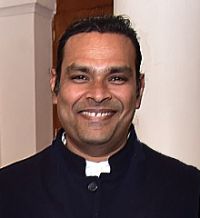
(Vipul Tamhane is a counter-terrorism expert and governance consultant)
The views expressed are not necessarily those of The South Asian Times