By Lalit Garg
In Jainism, the festival of Paryushan Mahaparva holds a unique significance. It is not merely a religious ritual but a celebration of deep introspection, self-purification, and turning inward to the depths of one’s soul. Jain culture, for centuries, has regarded this sacred observance as a profound medium of self-upliftment, meditation, and penance. The literal meaning of “Paryushan” is to dwell within, to immerse in the soul, to be in closeness with the self. This year, the grand festival of inner purification is observed from August 20 to August 27, 2025. During these eight days, every follower of Jainism devotes body and mind to spiritual practices, polishing the mind so deeply that past mistakes may be erased and future missteps avoided. The atmosphere created during this time purifies not only individuals but also society. In this sense, Paryushan is not only a festival of spirituality but also one of personal growth and transformation. It is not confined to the Jains alone—it is a universal festival for all humanity. The entire world can regard it as an extraordinary festival of peace, health, and nonviolence, as it guides people towards worship of the soul and a life of inner calm.
This is perhaps the only festival in the world where the focus is entirely on the self. Immersed in inner worship, the aspirant ascends to higher states of spiritual joy and makes an earnest effort to move closer to liberation. Rooted in the renunciatory culture of Jainism, Paryushan represents a unique spiritual path where chanting, penance, meditation, contemplation, devotion, and mindfulness elevate life to purity. It is the festival of awakening from slumber, of moving from the darkness of ignorance to the light of wisdom. To make this meaningful, one must set aside negligence and indulge in prayer, study, discipline, and meditation so that the inner soul blossoms with fragrance and purpose.
Paryushan also symbolizes the destruction of karmas. Only when the enemies of the soul—karmas—are destroyed can the soul dwell in its true essence. This festival inspires such inner residence of the soul. At its core lies the self, and Paryushan plays a vital role in unveiling the luminous and pure nature of the soul. True spirituality means nearness to the self, and Paryushan opens the doors, windows, and skylights of the heart to this reality. It is also a festival of Jain unity—known in the Digambar tradition as Dashalakshan Parva. For them, it begins on the fifth day of the bright fortnight of Bhadrapada and concludes on the fourteenth. In the Shwetambar tradition, the same day marks Samvatsari, celebrated through fasting, meditation, study, and renunciation. Even those who rarely fast or pray throughout the year awaken to discipline on this occasion. According to scriptures, Samvatsari should be observed after 49 or 50 days of the monsoon retreat (chaturmas) have passed, with 69 or 70 days remaining. The Digambar tradition emphasizes ten virtues (Dashalakshan Dharma) following Paryushan, while the Shwetambar tradition focuses on purification through rituals, fasting, and repentance. In both traditions, however, it is an opportunity for deep reflection, self-restraint, and inner progress.
The central aim of this festival is to free the soul from layers of karmas. Even amidst worldly busyness, during these days every follower slows down, reflects inward, and assesses life. Paryushan teaches that worldly comforts are fleeting, while true happiness lies within, in the purity of the soul. Introspection reveals our faults, mistakes, and weaknesses, and such realization brings the spirit of forgiveness and transformation. The final day of Paryushan is celebrated as Kshamavani—the Day of Forgiveness. On this day, each person seeks forgiveness from others, saying “Micchami Dukkadam”—“If I have hurt you in thought, word, or deed, I ask for your forgiveness.” This tradition builds an environment of harmony, friendship, and compassion within society.
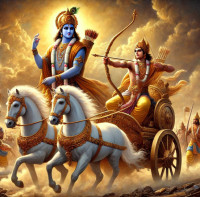
Thus, Paryushan is a profound exercise in self-restraint, meditation, and spiritual practice. It reminds us that life’s true purpose is not indulgence or material achievement, but self-elevation and the journey toward liberation. In these days, people not only study scriptures but also adopt values like compassion, nonviolence, coexistence, and simplicity in daily life. Each practitioner undergoes a rebirth of the self through penance, self-discipline, study, and forgiveness. It is a festival of seeing others as oneself. The Bhagavad Gita proclaims: “Atmaupamyena sarvatra, samam pashyati yo Arjuna”—He who sees all beings as equal to himself is wise. Lord Mahavira declared: “Mitti me savva bhoesu, veram majjhan kenai”—My friendship is with all beings, my enmity with none. The essence of Paryushan lies in human unity, peaceful coexistence, friendship, nonviolence, and universal moral values. These ideals must become the foundation of everyday life. Whether one considers oneself religious or not, whether one believes in rebirth or not, one can still embrace nonviolence as the best solution to problems. Violence has never provided a permanent solution; it has only deepened conflicts.
In this light, Paryushan is not just for the Jain community but for all humanity. It is a message, a path, a guide, and a living experiment in a nonviolent lifestyle. It urges us to focus first on purifying this very life before worrying about the afterlife. Its practice of Pratikraman—looking back at one’s actions—is an honest attempt at self-review. Through the eyes of the present, one reflects upon the past and the future, preparing for a wiser journey ahead. Paryushan is a festival of nonviolence and friendship. True peace comes only through nonviolence and friendship. At a time when the world faces terrorism, violence, hatred, corruption, and deep divisions, this festival offers timeless inspiration and direction. It calls humanity to embrace nonviolence not merely as an ideal but as a lived reality.
------------------------------
(The author is New Delhi-based writer, columnist, and journalist)