Each year, as the month of Shravan draws to its full moon, households across India and around the world prepare for one of Hindu culture’s most heartwarming celebrations—Raksha Bandhan. The name comes from two Sanskrit words: raksha meaning protection, and bandhan meaning the act of tying. But behind the colorful rakhis, sweets, and laughter lies a tradition that bridges family affection and timeless spiritual truths.
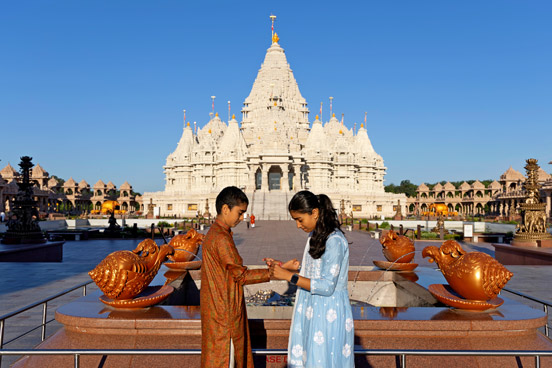
At its simplest, Raksha Bandhan is the day when sisters lovingly tie a decorative thread on their brothers’ wrists. This small yet meaningful act symbolizes a prayer for their brothers’ safety, happiness, and success. In return, brothers promise to support and protect their sisters in every stage of life. Over time, the custom has expanded beyond biological relationships—friends, family, and neighbors exchange rakhis, showing that bonds of respect and care can extend far beyond family lines.
The deeper story of Raksha Bandhan is woven into ancient Hindu scriptures. One legendary account speaks of Lakshmiji, the goddess of wealth, who sought to bring Bhagwan Vishnu back to Vaikunth after He promised to protect King Bali. Visiting King Bali’s kingdom on this sacred day, she tied a rakhi on his wrist, symbolically accepting him as her brother. In gratitude, Bali offered her a boon. She asked that Bhagwan Vishnu return to Vaikunth. This act of tying a simple thread became a tradition.
Over the centuries, swamis and spiritual teachers have drawn deeper meaning from Raksha Bandhan. His Holiness Mahant Swami Maharaj says that, like a brother’s promise to his sister, God promises unwavering protection to all devotees who turn to Him with devotion. Gunatitanand Swami, in the Swamini Vato, mentions this divine protection by saying,” God is ever ready to protect his devotees. How? Just as eyelids protect the eyes, hands protect the neck, a mother protects her child, and a king protects his subjects, God protects us.”
History and scripture are filled with examples of God’s protection—from saving Prahlad’s life despite his father’s cruelty to rescuing countless devotees from harm in times of danger. However, this protection is not limited to shielding devotees from physical harm. The greater safeguard is spiritual: keeping one’s heart and mind free from the traps of ego, anger, greed, and attachment.
In a modern world often defined by speed, competition, and personal ambition, Raksha Bandhan offers a moment to pause and reflect. The rakhi is more than a piece of thread—it is a visible reminder of invisible bonds, whether between siblings, friends, or between the
devotee and the Divine. It calls us to renew our commitment to protect one another, not only from external challenges but also from the inner storms that threaten peace and harmony.
As families gather, sweets are shared, and blessings exchanged, Raksha Bandhan continues to weave together the threads of love, duty, and faith—strengthening relationships while reminding us that the highest form of protection comes from God’s grace and our own commitment to live by noble values.
- Lenin Joshi
BAPS Swaminarayan Sanstha