By Vipul Tamhane
The 2024 presidential election presents a stark choice for the future of US foreign policy, with significant implications for global stability. Each candidate's approach promises to reshape America's global influence in divergent ways.
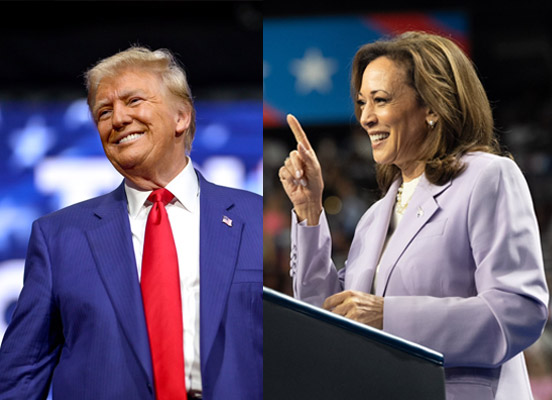
As the United States prepares for the 2024 presidential election, the world watches with bated breath, anticipating the significant geopolitical shifts that will inevitably follow. The choice between Donald Trump and Kamala Harris presents two starkly different visions of the future, each carrying profound implications for global trade, security, and diplomacy. With the balance of power on the world stage hanging in the balance, the outcome of this election could redefine international relations for years to come.
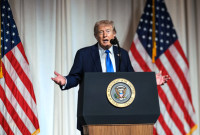
A Trump victory would likely mark a return to his primary policies that dominated his presidency from 2017 to 2021. Under Donald Trump, the "America First" doctrine focused on prioritizing US interests over multilateral agreements, renegotiating trade deals, imposing tariffs, and increasing defense spending. His foreign relations were marked by mixed outcomes, with an aggressive approach to China, and a conciliatory stance toward Russia.
Moreover, his withdrawal from the Paris Agreement and isolationist stance toward NATO strained America's global standing as a global leader on climate issues. Trump's hardline stance on immigration, characterized by a controversial border wall and strict policies, would likely be revived. Americans have not forgotten his Charlottesville controversy, sedition, and January 6th attack on the US Capitol and undiplomatic threats to the rival world leaders when in power and while campaigning. However, his administration's notable achievements that came through include brokering the Abraham Accords in the Middle East and strengthening defense partnerships with countries like India.
On the other hand, the Biden-Harris administration has faced several controversies, including the chaotic Afghanistan withdrawal in August 2021, which led to the Taliban’s swift takeover and chaos at Kabul airport. Their border and immigration policies have been criticized due to record migrant numbers and overcrowded facilities. Rising inflation has strained Americans, putting their economic policies under scrutiny. Despite praise for the vaccine rollout, mixed messaging on COVID-19 has been contentious.
However, under the Biden-Harris administration, the US rejoined the Paris Agreement and worked to strengthen international health systems while also fostering cooperation in areas like artificial intelligence. This administration strengthened alliances, particularly through NATO, while maintaining a firm stance against Russia with sanctions and support for Ukraine. Analysts observe that a Harris administration would likely focus on restoring multilateralism, rebuilding alliances, and addressing global challenges such as climate change, cybersecurity, and public health.
Harris’s approach is expected to be one of collaboration, with an emphasis on diplomacy. If elected, Harris would likely continue this diplomatic path, reinforcing multilateral commitments and global cooperation. However, her administration would face significant challenges, particularly in managing domestic issues while simultaneously navigating complex international relations.
The 2024 presidential election presents a stark choice for the future of US foreign policy, with significant implications for global stability. Each candidate's approach promises to reshape America's global influence in divergent ways. Across the globe, nations are closely monitoring the US election and preparing for its potential outcomes. The diverging policies of the veteran candidates, Donald Trump and Kamala Harris offer fundamentally different approaches to governance and foreign policy.
In Europe, leaders are particularly focused on how the next administration will handle NATO commitments and the ongoing Ukraine conflict. A Harris administration is expected to maintain strong support for NATO and European security, ensuring stability in the region and adopting a more transactional approach, which could strain relations and impact European trade.
In Asia-Pacific, the 2024 US presidential election presents contrasting foreign policy visions. Kamala Harris emphasizes multilateral cooperation, sustainability, and social justice, advocating for tax reforms, climate change action, and stronger global alliances. Her foreign policy focuses on countering China's growing influence in Asia by reinforcing ties with key allies like India, Japan, South Korea, and Australia.
In contrast, Donald Trump’s policies prioritize national sovereignty, economic protectionism, and military strength. His approach favors unilateral actions, strict immigration policies, and aggressive trade tactics, especially with China. Both candidates’ approaches will shape regional security and economic dynamics in the Asia-Pacific, with global implications.
The Middle East, too, is watching the election closely. A Harris administration may re-engage diplomatically with Iran, seeking to revive the nuclear deal and promote stability in the region. Trump, on the other hand, is likely to continue his maximum pressure campaign against Iran while maintaining strong support for Israel, continuing the legacy of the Abraham Accords.
In Africa, the US presidential election holds significant implications for development, security, and trade. Harris is expected to focus on counterterrorism efforts, sustainable development, and climate change initiatives. Trump, however, may take a more militaristic approach, potentially prioritizing military aid over long-term development programs. This divergence in policy could shape regional stability and economic growth across the continent.
Similarly, Latin America is paying close attention to how the next administration will approach immigration policies and economic cooperation. A Harris presidency would likely promote more humane immigration policies and support democratic governance in the region. Trump, however, is expected to continue his strict immigration stance and focus on renegotiating trade agreements to benefit the US, potentially straining relations with neighboring countries.
The 2024 US presidential election is of particular interest to global rivals like China, Russia, Iran, and North Korea. A Harris administration is expected to take a more diplomatic and cooperative approach, working through international institutions to address challenges like climate change, nuclear proliferation, and cybersecurity. China may see a return to cautious trade negotiations and human rights dialogues, while Russia would likely face
continued sanctions and a unified NATO under Harris’s leadership.
A Trump victory, however, would signal a return to confrontation. China could anticipate intensified trade wars and aggressive rhetoric, while Russia may expect less interference in its regional ambitions. Iran, meanwhile, would likely face stricter sanctions, and North Korea could see renewed threats of military action. The global ramifications of a Trump or Harris presidency will be felt far and wide, with each region bracing for a different set of policies and outcomes.
As the world awaits this pivotal moment, the 2024 US presidential election, the outcome of it is clear that the next administration will have a profound impact on global politics, international relations, and regional stability.
Whether the US chooses Trump or Harris, the ripple effects will be felt across the globe, influencing everything from trade agreements to security alliances, and from climate change to human rights. The world is watching, waiting to see which path the US will take as it charts a course through a world in flux.
----------------------------
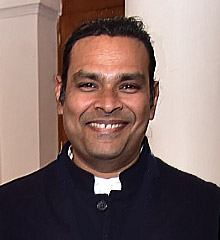
(The writer is a counter-terrorism expert and a visiting faculty with Pune University (SPPU) at the Department of Defense and Strategic Studies. He is also the founder & editor-in-chief at Diplomacy Direct, a public interest think-tank. He can be contacted at [email protected])
The views expressed are not necessarily those of The South Asian Times.