Regardless of who is elected and comes to power, the chances of cooperation between India and the United States for helping international causes will grow.
By Rajesh Mehta
This year's US Presidential elections will be consequential with far-reaching consequences for the global world order. The world is witnessing multiple ongoing conflicts with Ukraine-Russia on one front, the widening Israel-Hamas conflict on another, potential for friction with China-Taiwan, and deteriorating India-Canada relations. This year has been detrimental in terms of climate with scientists across the world referring to increasing irreversible climate disasters. The global economy is also facing major headwinds and supply chains are being disrupted. This is a turbulent period and that makes the US elections all the more important.
Today there are two major democracies that can play an important role in favor of global peace. One is the US from among developed countries and the second is India from the Global South. The first and biggest contribution they can make is in working towards resolving these geopolitical conflicts. Global Peace should be on the agenda. This contribution will aid towards greater stability, security, and prosperity for all.
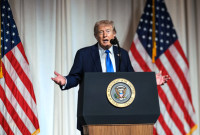
Trump supporters also vouch for the peaceful foreign policy during the period of the Trump presidency and believe that with him coming to power, global conflicts would reduce substantially. Second, in the context of trade and economy, the US presidential election might also significantly change the international environment. The protectionist approach by Trump would stress US-India economic relations, especially in IT services.
Harris, with a multilateral approach, can reduce the strain on international trade and advance free trade, which will be fruitful for both countries. Harris would be able to bring stability to international trade relations, which is a prerequisite for growth in US-India economic relations. India and the US must aim to ensure a free, fair, and prosperous economic and trade environment and rules-based ecosystem.
Third, there should be a wider focus on climate change in the relations between the two countries. Ongoing natural disasters are a pressing issue, and they are only becoming more destructive each year. India and the US must take urgent climate action as responsible stakeholders and stewards of the planet. Fourth, in recent years, the role of international organizations has been significantly reduced.
If Trump comes to power, either the UN will have to be reinvented or it will face a stronger drag in its functioning. Trump’s quote at the UN that “the future does not belong to globalists” signals open hostility to the multilateral order since WW2. Similarly, other international organizations like the International Court of Justice are also challenged since it condemned Israel’s actions in the ongoing conflict with Hamas with Prime Minister Benjamin Netanyahu commenting that it is “absurd”.
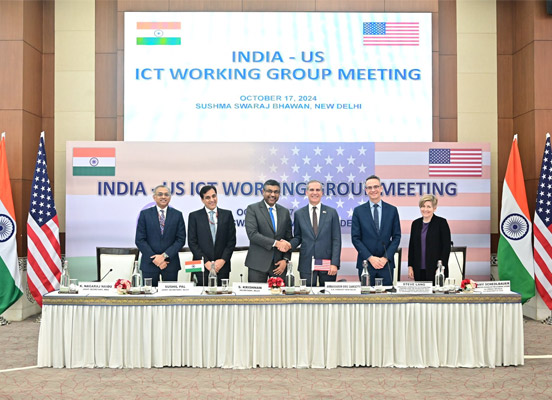
Technology will continue to drive US-India relations. The new technological frameworks, now with generative AI and other future technologies such as space tech and semiconductors, will see joint collaboration, regulation, and creation of frameworks. America and India will lead innovation in such sectors as 5G and cybersecurity. Their natural partnership ensues from both India's burgeoning IT services sector and technological infrastructure in the United States.
During the very trip of Prime Minister Narendra Modi, the two allies-
acknowledged and applauded the success of the Initiative on Critical and Emerging Technology (iCET) in deepening and expanding strategic cooperation across key technology sectors, such as space, semiconductors, and advanced telecommunications. Both Leaders further agreed on a mutual commitment to enhance regular engagements to improve the momentum of collaboration in fields such as artificial intelligence, quantum, biotechnology,
and clean energy. Innovation in technology is still at the heart of this partnership, offering economic growth and strategic advantages for both countries.
This transforms India into a rising global superpower, which increases its strategic value to the US. As it expands its economy and gains strength in Asia, it becomes a critical ally for power-balancing in the region, especially versus China. Trump might seek additional defense cooperation with India, while Harris might support the Indian leadership in regional diplomacy. Increasing international profile of India will also ensure its relevance to US foreign policy, however the administration.
The sharpest difference between Trump and Harris lies in their approach to climate change: India, highly vulnerable to climate disasters, has committed to renewable energy and sustainable development. A second term for Trump would undermine global climate action, whereas Harris would likely prioritize climate cooperation. US-India collaboration on renewable energy and climate financing under Harris would strengthen to align with the green initiatives embarked on by India. Climate change is a very broad area through which Harris can offer a more beneficial partnership globally.
This relationship will increasingly gain importance as tensions about geopolitical concerns and climate issues grow. The future of the partnership will be determined by Trump's defense and trade or by Harris's diplomacy and climate action; strength does lie in shared strategic interests that continue to play a key role in shaping global peace and progress.
The Indian diaspora in the US also plays a consequential role in the elevation of the relationship between the two countries. As a model minority, the Indian diaspora is particularly well suited to support the increasing closeness of the India-US relationship. Regardless of who is elected and comes to power, the chances of cooperation between India and the US for helping international causes will grow. Both countries can play an important role geopolitically, economically, and environmentally and this bilateral relationship will be a foundational relationship in this century. This relationship will create a way forward for global peace, for the planet, and for prosperity.
---------------------------
(The writer is an expert on the India-US relationship, market-entry, and public policy. He can be contacted at [email protected])