
Green Diwali refers to an eco-friendly celebration of the Diwali festival, focused on reducing the environmental damage caused by traditional festivities. It addresses pollution from firecrackers and non-biodegradable waste by promoting sustainable and healthy alternatives. The movement began in the late 2000s in response to concerns over declining air quality and health issues.
Key components

The green crackers can be identified by the green logo of CSIR-NEERI, along with encrypted QR codes on the packets. (Photo courtesy: Pexels)
>> Green crackers
Green crackers are a low-emission alternative to conventional firecrackers, designed to reduce air pollution while still allowing festive celebrations. They are developed using scientific standards set by the Council of Scientific and Industrial Research – National Environmental Engineering Research Institute (CSIR-NEERI).
They emit 40% to 80% less noxious fumes compared to conventional firecrackers, and do not contain banned and highly toxic chemicals like barium nitrate, arsenic, and lead. They use alternative chemical formulations that produce less smoke and noise. However, scientists have stressed the fact that “less polluting” does not mean “no pollution”.
How green crackers are differentReduced shell size: Smaller shells with less raw material in the composition No ash-producing materials: Eliminates ingredients that produce heavy ash when burnt Use of additives: Dust suppressants are added to reduce particulate matter (PM) emissions Designed to cut pollution: Achieves a 30 per cent reduction in PM and at least 10 per cent reduction in gaseous emissions Uniform quality: Manufactured to meet consistent safety and environmental standards. |
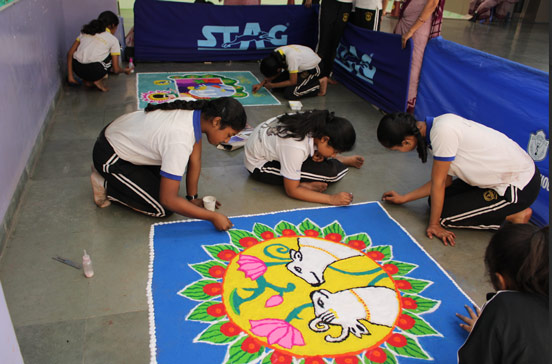
Students using eco-friendly colors to make rangoli on Diwali. (Photo courtesy: X@DPSSurat)
>> Biodegradable decorations
Natural decorations are encouraged to minimize waste. Instead of plastic or electric lights, traditional clay lamps are used to light up homes, and for those who prefer electric lighting, energy-efficient LED lights or solar-powered lights are recommended to reduce electricity consumption.
Rangoli designs can be made with natural or organic colors, such as dried leaves, flower petals, turmeric, and rice powder, instead of chemical dyes.
Using indoor and outdoor plants like areca palms, snake plants, and money plants for decoration is another growing trend.
>> Eco-friendly gifts: Gifting plants, homemade crafts, organic sweets, or items packed in reusable cloth or jute bags promotes sustainability. Seed-embedded "crackers" that can be planted are also available.
>> Waste reduction: Green Diwali promotes avoiding single-use plastics and properly disposing of waste after celebrations.
>> Community engagement: Campaigns like "Harit Diwali, Swasth Diwali" launched by the Ministry of Environment, Forest and Climate Change raise awareness about the impact of pollution. Educational initiatives in schools also encourage students to adopt green practices.
Why Green Diwali is important
>> Public health: Traditional firecrackers release toxic fumes containing heavy metals like lead and cadmium, which are especially harmful to children, the elderly, and those with respiratory issues.
>> Environmental protection: The initiative reduces air and noise pollution, helping to combat rising pollution levels, particularly in major cities.
>> Cultural preservation: Green Diwali encourages celebrating the festival's traditional values of light, togetherness, and nature while being mindful of its impact.
How to celebrate a Green Diwali
(Photo courtesy: Freepik)
>> Avoid firecrackers entirely or opt for certified "green crackers" where permitted, which produce less noise and air pollution.
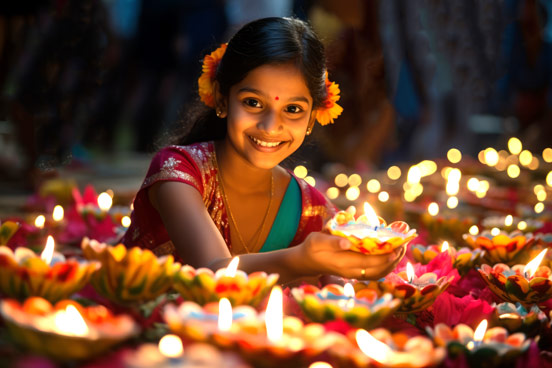
>> Use traditional clay lamps, candles, or solar-powered lights instead of conventional electric light strips.
>>Use fresh flowers, leaves, and organic colors for rangoli and house decor.
>> Give eco-friendly gifts like plants, homemade treats, or sustainable goods.
>> Carry jute bags for shopping, use reusable cutlery, and properly manage waste.
>> Celebrate consciously by focusing on spending time with family, making homemade sweets, and enjoying the spirit of the festival in a way that respects both people and the planet.