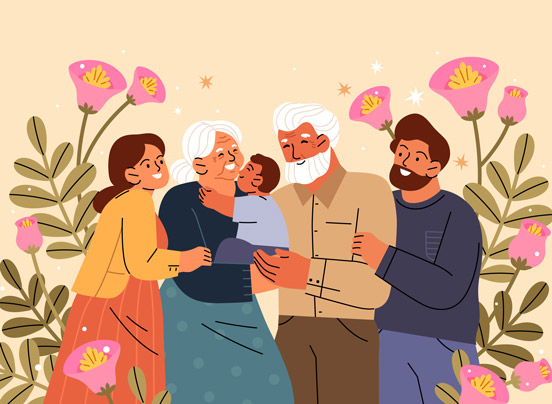
Elders play a central role in preserving traditions, sharing wisdom, guiding families, and fostering social harmony.
By Himanshu Rath
Across the region, particularly in India, senior citizens are traditionally seen not merely as dependents in old age, but as living repositories of wisdom, values, and collective memory. Their presence within families has historically ensured continuity of tradition, social harmony, and ethical guidance. Even as South Asia undergoes rapid social and economic change, the relevance of elders remains profound, though increasingly challenged.
A deep-rooted tradition of respect
Respect for elders is deeply embedded in South Asian culture. In India, it is reinforced through family customs, religious teachings, and philosophical thought. Practices such as touching elders’ feet, seeking their blessings before important milestones, and caring for ageing parents within the family home reflect a civilisation that places immense value on age and experience. The timeless dictum “Matru Devo Bhava, Pitru Devo Bhava”, regard your mother and father as divine, captures this ethos, elevating care for elders from a social obligation to a moral and spiritual duty.
Historically, joint and extended family systems were the norm. Multiple generations lived together, sharing responsibilities, resources, and emotional bonds. Within these families, elderly members occupied positions of dignity and authority. They were custodians of family values, traditions, rituals, and histories. Their advice was sought on matters ranging from marriage and education to property disputes and conflict resolution. Their blessings were believed to bring prosperity, peace, and success, reinforcing their centrality in family life.
This cultural framework ensured not only physical care for older persons but also emotional security, social inclusion, and a strong sense of purpose. Elders remained actively involved in daily life, decision-making, and celebrations, strengthening intergenerational bonds and reinforcing social stability.
Elderly as the guiding force within families
Senior citizens play a pivotal role as the guiding force of families. Having lived through economic hardship, social transformation, political change, and personal loss, they possess experiential wisdom that no textbook can impart. Their life journeys embody lessons of resilience, patience, sacrifice, and ethical living, qualities especially valuable in today’s fast-changing world.
Within families, elders often act as mediators and peacemakers. Their emotional maturity, balanced perspective, and moral authority enable them to resolve disputes between spouses, siblings, and generations with empathy and fairness. For younger family members, especially children and adolescents, grandparents serve as powerful role models. Through everyday interactions, storytelling, and shared rituals, they transmit values such as discipline, compassion, tolerance, frugality, and respect for others.
Children raised in close association with grandparents often develop stronger emotional intelligence, cultural awareness, and a deeper sense of rootedness. The presence of elders enriches family life by providing emotional warmth, stability, and continuity, helping families navigate both joys and crises with greater resilience.
Importance of senior citizens in society at large
The contribution of senior citizens extends far beyond the family unit. In society, older persons represent a vast reservoir of social capital, cultural heritage, and traditional knowledge. Many continue to contribute actively as community leaders, mentors, volunteers, caregivers, and informal counsellors, strengthening social cohesion and intergenerational solidarity.
In rural areas, elders often guide community decision-making, preserve customs, and uphold social norms. In urban settings, many retirees engage in social services, religious activities, neighborhood support, and care of grandchildren. Even after retirement, a significant number of seniors remain economically and socially productive, supplementing family incomes, supporting households, and easing pressures on working-age adults. Their involvement enhances overall societal well-being and reinforces the idea that ageing does not equate to irrelevance.
Changing socio-economic and demographic realities
Despite this rich legacy, South Asia is experiencing profound socio-economic and demographic shifts that are reshaping the lives of older persons. Rapid urbanization, migration for employment, nuclearization of families, changing lifestyles, and increased workforce participation of women have weakened traditional support systems. At the same time, rising life expectancy and declining fertility rates have led to a steady increase in the proportion of elderly people.
In India, the elderly population is growing rapidly. While people are living longer, many face chronic health conditions, inadequate financial security, and shrinking social networks. Longevity has improved, but quality of life has not always kept pace. A growing number of older persons experience loneliness, neglect, and diminishing respect within families and communities.
Research by the Agewell Foundation highlights these concerns. Its studies indicate a perceived decline in traditional respect and care for elders. According to the Status of Gainful Engagement Opportunities for Old People – India (2025) report, only about 16.7% of elderly respondents feel fully respected and cared for by younger family members, while 21.1?el only somewhat respected. Many seniors report being ignored in family decisions, emotionally isolated, or treated as liabilities rather than valued assets.
Yet, these studies also reveal a powerful emotional truth: family remains central to the lives of older persons. The overwhelming majority of seniors continue to prefer living with their children rather than in institutional care, underscoring the enduring importance of family bonds.
Why the role of the elderly is even more crucial today
Paradoxically, in today’s complex, fast-paced, and stressful world, the role of senior citizens has become even more important. Families increasingly face intergenerational tensions arising from digital dependence, academic and career pressures, work-life imbalance, and shifting value systems. Differences in outlook between children, parents, and grandparents can create misunderstandings and emotional distance.
In this context, elderly family members can act as bridges between generations. Their patience, empathy, and ability to listen without judgement place them in a unique position to mediate conflicts. Grandparents often understand the aspirations and anxieties of younger generations while also appreciating the responsibilities faced by parents. This enables them to foster dialogue, reduce friction, and restore harmony within families.
Moreover, elders provide emotional anchorage during times of uncertainty. Their lived experience reassures younger generations that challenges can be overcome. In an era marked by anxiety, fragmentation, and rapid change, seniors offer continuity, stability, and a deep sense of belonging.
Respect, dignity, and inclusion
Agewell Foundation’s research presents both concern and hope. While many elders perceive a decline in respect, most believe that mutual understanding, value-based upbringing, and inclusion can restore intergenerational harmony. Families that actively involve seniors in decision-making and daily life report stronger emotional bonds and fewer conflicts.
The studies emphasize that respect is inseparable from dignity, autonomy, and inclusion. Older persons feel respected when they are listened to, consulted, and allowed to live life on their own terms, rather than being ignored, overprotected, or sidelined.
Ensuring a respectful and dignified life for elders
Honoring the blessing of senior citizens requires sustained efforts at multiple levels. Within families, respect must be reflected in everyday actions: listening patiently, valuing elders’ opinions, involving them in decisions, and ensuring emotional companionship. Regular intergenerational interaction helps children learn values while enabling seniors to feel valued and connected.
At the societal level, communities should promote age-friendly environments through accessible infrastructure, opportunities for social participation, lifelong learning, and volunteering. Positive portrayals of ageing in the media can challenge stereotypes and reinforce respect for older persons.
At the national level, policies must prioritise social security, healthcare, legal protection, and age-friendly planning. Public awareness initiatives can reinforce the message that respecting elders is not merely a tradition but a social necessity.
Respect the elderly, stay blessed
Respecting senior citizens is ultimately about recognizing a blessing. Elders enrich families and societies with wisdom, compassion, and guidance shaped by lived experience. When South Asian societies honour their elderly, they preserve their cultural strengths while adapting to modern realities. In doing so, they build a more humane, balanced, and inclusive future, one that values people at every stage of life and remains rooted in the timeless truth that elders are, and will always be, the backbone of society.
---------------------------------------------
.jpg)
(Himanshu Rath is the founder of Agewell Foundation, a not‐for‐profit organization working for the welfare and empowerment of the elderly in India)