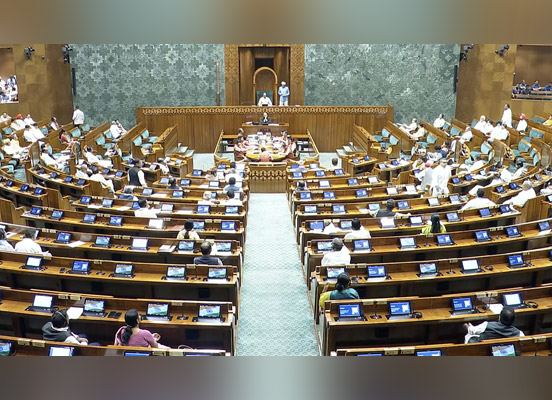
New Delhi: The Budget session of Parliament is unlikely to be adjourned sine die as scheduled on April 2, news agencies reported on April 1. The government plans to extend the session by two to three days in the third week of April to bring a bill to increase the number of Lok Sabha seats to 816, the agencies said. The idea is to have at least 273 seats in the Lok Sabha (33 per cent) reserved for women.
The budget session, which started on January 28, was supposed to end on April 2. The government will convene the session for two to three days, but not this week.
During this extended period, the government is likely to introduce a Constitution amendment bill aimed at modifying the provisions of the women's reservation law — the Nari Shakti Vandan Adhiniyam — to facilitate an increase in the strength of the Lok Sabha from the current 543 to 816 seats.
The proposed expansion would include reserving at least 273 seats, or 33%, for women, PTI reported, citing sources. The reservation is also expected to follow a vertical framework, ensuring quotas for Scheduled Castes and Scheduled Tribes within the women's quota.
While a Constitution amendment bill will tweak the women’s reservation law, another ordinary bill will amend the Delimitation Act. Once approved by Parliament, the proposed laws will come into force on March 31, 2029, and will help reserve seats for women in the next Lok Sabha elections and assembly elections in Odisha, Arunachal Pradesh, Sikkim, and Andhra Pradesh.
Session highlights• The Rajya Sabha has passed the Central Armed Police Forces (General Administration) Bill, 2026, by voice vote as the Opposition staged a walkout. The legislation aims to establish a unified legal framework for personnel across the Central Armed Police Forces. • The Lok Sabha has passed a bill to recognize Amaravati as the sole and permanent capital of Andhra Pradesh, with support from the Bharatiya Janata Party, Indian National Congress, and Telugu Desam Party. • Union Minister Piyush Goyal introduced the Jan Vishwas (Amendment of Provisions) Bill, 2026, in the Lok Sabha, which seeks to amend certain laws to decriminalize minor offences and rationalise penalties, aiming to promote trust-based governance. • The government has decided not to introduce the FCRA Amendment Bill, 2026, in the Lok Sabha, amid escalating political controversy. |