By Vandana Sehgal
In the hustling-bustling culture of India’s cities, a digital transformation is unfolding quietly through the streets of urban India. Street vendors are an integral part, as important as metro or flyovers, in the urban ecosystem. The PM Street Vendor’s Atma Nirbhar Nidhi (PM SVANidhi) scheme, launched by the Ministry of Housing and Urban Affairs in June 2020, aims at the economic and financial empowerment of street vendors.
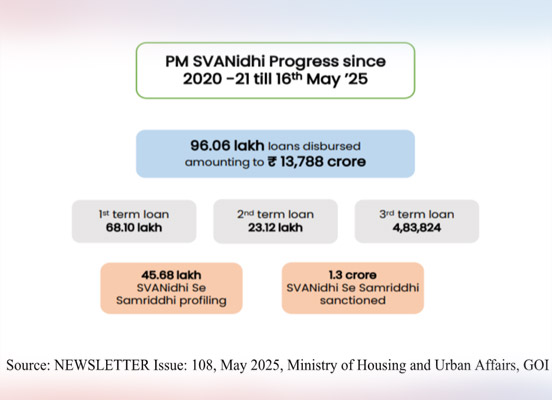
The scheme, providing collateral-free working capital loans of ₹10,000 to street vendors, has not only become a financial lifeline during the COVID-19 pandemic but has been significantly instrumental in bringing them into the formal financial system. In addition to financial inclusion, the scheme drives the informal urban street vendors into the mainstream, promoting digitization and formalization.
Street vendors have traditionally relied on cash transactions and remained outside the purview of the formal financial system. The constant challenges faced in accessing credit have perpetuated a vicious circle of poverty, informal borrowing, and economic vulnerability. PM SVANidhi scheme is an effort to disrupt this cycle by making digital onboarding a core component of its implementation. The scheme encourages digital transactions by offering incentives in the form of cash back of up to ₹1,200 per year to vendors on the adoption of UPI and QR code-based payment systems. Further, on timely repayments, vendors are also eligible for higher loans in subsequent tranches—₹20,000 in the second and ₹50,000 in the third cycle—promoting financial discipline and creditworthiness.
PM SVANidhi scheme is not just a financial intervention for the street vendors; it is actually acting as a social policy instrument that has far-reaching implications in enhancing the women’s participation in the urban informal economy. Linking women street vendors to bank accounts, Aadhaar authentication, UPI-based payments, and cashback incentives for digital transactions, the scheme represents their formal interaction with a banking institution. A QR code may seem like a small thing, but for a woman street vendor, it is often the first digital signature of self-worth.
(Infographic courtesy of the author)
Women street vendors constitute a substantial proportion of India’s informal workforce, especially in urban street vending. These women are engaged in various informal sector activities ranging from tailoring kiosks and selling fresh vegetables and bangles to operating small food stalls. Yet due to a lack of formal documents, collateral, or even bank accounts, they have been kept outside the ambit of formal finance. PM SVANidhi scheme has given them a platform to create their own financial identities. As per the latest data, the PM SVANidhi scheme has benefitted approximately 30.97 lakh women street vendors, accounting for 45% of the total beneficiaries under this scheme (Press Trust of India, March 2025)
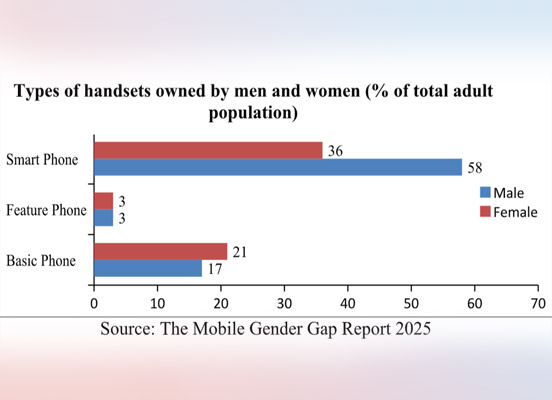
The smartphones, QR codes, and payment apps have become a tool of agency for women street vendors that are enabling them to build their digital footprints and catalyzing a transformative journey towards digital empowerment. This shift will significantly contribute to the promotion of digital literacy, bridging the digital divide, and will foster women's entrepreneurship.
While the achievements are substantial, the journey has just started. The participation of women vendors has been limited due to structural barriers such as:
(Vandana Sehgal is an Assistant Professor, Department of Humanities and Social Sciences, Jaypee Institute of Information Technology, Noida. The views expressed are her own)