By Naman Mishra and Palakh Jain
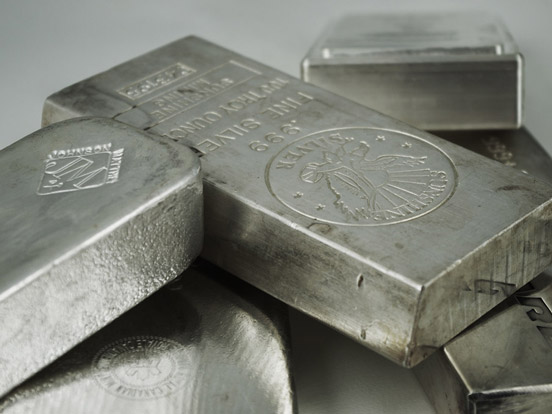
Silver is no longer behaving like a secondary precious metal. As of 2024-25, it is one of the commodities that has shifted to a structural adjustment, and not a cyclical recovery. Since mid-2023, prices have shot up and surpassed a number of base metals, as well as competing with conventional safe-haven types of assets. The current rally is not the result of paper hyperactivity or recovery after the pandemic. Rather, it is a symptom of something more profound: industrial policy, the economics of energy change, and a resettling of world systems of production. There are a few places where these forces are so evident as in India, whose fast-growing demand gives us a perspective through the lens, which is why the rise of silver would tend to become long-term and policy-relevant.
India’s demand shock: From ornament to infrastructure
India has recently become one of the largest silver importers in the world, and this year it is projected that the country will import over and above its long-term history average of silver. Retail investment demand can not account for this rush. Rather, the latter is an indicator of a change in the growth model of India that is becoming more and more electronics, energy, and manufacturing-intensive.
The focus of this transition is the renewable energy policy of India. Solar energy will be the core of this expansion as the country has promised to reach 500 GW of non-fossil fuel by the year 2030. Silver is an essential raw material in a photovoltaic-based technology, mainly applied in photovoltaic solar cell conductive pastes. Even a conservative estimate shows that the implementation of solar in India can contribute to a significant percentage of incremental global silver demand by the decade's end.
This trend is supported by electronics production. In Production-Linked Incentive (PLI) plans, India expects to increase domestic electronics production several times within the next several years. The application of silver in semiconductors, printed circuit boards, sensors, and other sophisticated electronics cannot be technologically replaced soon.
This is compared to gold, where demand is not price-elastic or even discretionary, since the demand for industrial silver is inelastic and productivity-enhancing. Such a difference is macroeconomically important. Though imports of silver increase the headline trade deficit in India, it is capital deepening and not consumption leakage. Effectively, India is borrowing the productive potential of tomorrow: currently, it is one of the lesser-known details of current-account discussions.
Global supply constraints and the energy transition paradox
Although the demand is accelerating, the supply of silver in the world is structurally limited. The level of mine production has recorded a slight, continued improvement during the last decade, not because of underperforming prices but rather because of geological and organizational factors. Approximately two-thirds of the world's output of silver is through a by-product of copper mining, lead mining, or zinc mining. Consequently, there is no individual silver supply available in response to the price signalling.
This forms what can be referred to as an energy-transition paradox. The technologies related to decarbonization, such as solar panels, electric vehicles, grid infrastructure, and data centers, need to be equipped with metals that have low elasticity in their supply. This is demonstrated with electric vehicles in that an electric vehicle, on average, consumes significantly more silver per unit compared to an internal combustion vehicle due to the increased electronic components and power control systems. Adding to the fast growth of AI-based data centres, 5G networking, and digital infrastructure, silver demand is integrated into the depths of the contemporary growth paradigm. Silver is no longer, however, another cyclical commodity. It is becoming more of a system-level constraint with a similar status to copper or lithium, where a lack of supply can hold technology implementation at any price incentive.
Monetary fragmentation and silver’s dual role
Another similar change in the global fiscal scene is taking place. Increasing geopolitical fragmentation, ongoing financial strains, and structurally excessive debt cite renewed interest in real assets. Silver has its own niche although it is significantly less as a monetary hedge as compared to gold. It is both an industrial requirement and a monetary resource, the twofold identity that is especially pertinent to the developing economies. India Investor turnover in silver exchange-traded products has grown at very high rates over the last couple of years in support of hedging needs as well as in faith in the local industrial growth. Institutional investors and met producers all around the world are finding silver not only as a precious metal worthy of the name poor man's gold, but, in fact, becoming a more affordable form of transition metal, at least in terms of strategic significance, comparable to the roles of copper or the rare earths.
The present silver bubble is a fundamental-driven repricing that the world is experiencing today. The industrial development of India, combined with a lack of inelasticity in world supply, and the potential intensity of the energy transition on metal, has permanently changed the demand curve of silver.
There is the emerging belief that silver has always been ornamental or speculative, and that belief is eroding. Similar to the way in which China transformed the global markets of steel, rare earths, and solar equipment as it industrialized, India is starting to have a similar effect on the silver markets. This simply means that the silver boom would be difficult to unwind in one cycle. It is being re-invented as a critical addition to technologies that drive economic competitiveness at the turn of the 21st century. The ones who still perceive it as being purely speculative or decorative can already be on the wrong side of the curve.
[Naman Mishra is a Doctoral Researcher at Bennett University in Greater Noida, India. Palakh Jain is an Associate Professor at Bennett University and a Senior Visiting Fellow at New Delhi-based Pahle India Foundation.]
The views expressed are personal and not necessarily those of The South Asian Times