By Vipul Tamhane
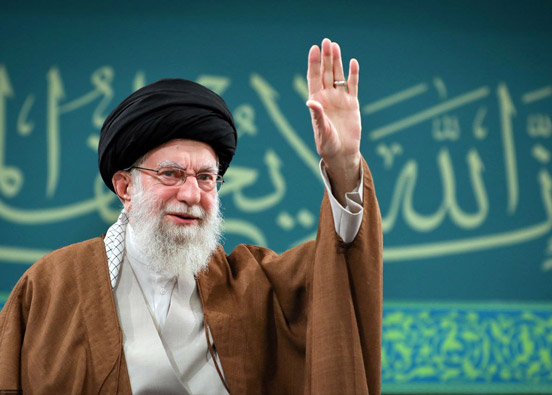
When the first wave of Israeli jets screamed across Iranian airspace and American Tomahawk missiles slammed into Tehran, the world crossed a threshold from which there was no orderly return. The death of Ayatollah Ali Khamenei, who has led Iran for nearly four decades, constitutes a conflict that extends beyond its military aspects.
The Muslim world will experience a transformation that will impact many individuals. The transformation will not take place in Western Asian countries. Islamic educational institutions will serve as the primary sites for the transformation to occur. Online communities and refugee residential areas will serve as additional pathways for the transformation to spread. The transformation will extend from Sanaa to the Sahel and from Beirut to Birmingham.
The current situation requires us to investigate how Ayatollah Ali Khamenei impacted people beyond the borders of Iran. For the global Shia community, he was the Wali al-Faqih, the guardian jurist - a figure of immense theological and political authority. His death at the hands of American and Israeli forces will not be received as the elimination of a tyrant, as Washington hopes. It will be received as martyrdom. In the geography of Islamic political imagination, few things are as galvanizing as a leader dying at the hands of a perceived Western-Zionist alliance. The narrative writes itself: the custodian of resistance was murdered. What must now follow is revenge.
What will Iran’s internal fracture lead to - chaos or radicalization?
Inside Iran, two contradictory forces are now racing against each other. One is the genuine popular longing for liberation - the millions who poured into the streets in January 2026 and were gunned down by the thousands, who have spent decades under the boot of a regime that sacrificed their prosperity on the altar of revolutionary ideology. These Iranians may initially celebrate, however cautiously. Reza Pahlavi has spoken of liberation; celebrations reportedly broke out in Isfahan the night Khamenei’s death was confirmed.
But the second force is more dangerous, and historically more durable. When external threats loom, broken defense systems often unite without delay. A sense of outside danger sharpens internal alignment quickly. The Islamic Revolutionary Guard Corps spans 200,000 personnel, shaped by years of ideological training. Younger members gained combat experience in Syria, Iraq, and Lebanon through prolonged conflict. Such forces tend to move independently, even without explicit orders from the top. Direction emerges from shared belief, not just command. It needs a target. It has one.
Washington’s decapitation strategy assumes that removing the head kills the body. Iran’s power structure is not a simple hierarchy; it is a hydra. Cut one head, and the remaining ones do not simply comply - they radicalize. The IRGC’s commanders have every incentive to prosecute revenge aggressively, both to legitimise their claim to power and to demonstrate that the revolution survives its founder.
The most dangerous near-term scenario is not regime collapse, but hardliner consolidation under military leadership, an Iran that becomes a revolutionary junta stripped of clerical moderation and driven purely by vengeance calculus. An Iran governed by generals who have nothing to lose is far more willing to cross red lines than one governed by ageing ayatollahs calculating theological legitimacy.
Unshackling the proxy web of Houthis, Hezbollah, Hamas
Iran’s strategic genius was always indirect. The Iranian government established its dedicated Axis of Resistance through Hezbollah in Lebanon, the Houthis in Yemen, Hamas in Gaza, and various Shia militias across Iraq and Syria to serve its foreign policy needs while maintaining its ideological commitment to the revolution. The forces do not function as mercenaries because they will continue fighting even after their paymaster loses control.
The group members believe in their cause while controlling their own military operations and weapons, and achieving political power that does not depend on Tehran.
The Houthis have already declared their intention to renew their attacks on the Red Sea. The Red Sea serves as a critical international trade route because it handles twelve per cent of worldwide commerce, and any disruption to its operations will further increase the existing oil market disturbance. More significantly, the Houthis no longer need Iranian command authorization. They have ballistic missiles and a messianic ideology that frames their struggle in explicitly apocalyptic terms. Khamenei’s death will be presented to Houthi fighters not as defeat but as a divine test, and their historical response to such tests has been to escalate ferociously.
Hezbollah presents an even graver danger. It is, at its core, a state within a state in Lebanon, armed with an estimated 150,000 rockets, battle-tested commanders, and a political apparatus that has survived Israeli campaigns before. The killing of Khamenei - who was, for Hezbollah, not merely an ally but a spiritual authority - triggers an almost theological obligation for retaliation. Expect attacks on Israeli population centres, attempts on Western diplomatic targets, and intensification of sleeper cell activation across Europe and South America, where Hezbollah has long maintained documented operational networks.
Hamas, already decimated and desperate, will interpret Khamenei’s killing as proof that accommodation with the West is impossible and that only violent resistance survives. Its remaining military wing does not require Iranian logistics to execute terrorism. It requires motivation. That motivation has now been supplied in overwhelming abundance.
The global radicalization wildfire
Here is where the danger metastasises beyond the battlefield. The Western-Israeli alliance's assassination of Khamenei will serve as the highest recruitment tool for jihadist groups in the past twenty years.
The logic that radicalization recruiters will deploy is simple and viscerally effective: the supreme leader of the Islamic Republic, the most powerful Muslim head of state in the world, was assassinated by America and Israel. Your governments are silent or complicit.
The United Nations passed resolutions that changed nothing. If this can happen to Khamenei, no Muslim leader who refuses to submit is safe. The only meaningful response is resistance.
This narrative will not merely activate Shia communities, though it will ignite them. The process will create a dangerous situation because it leads to Shia and Sunni jihadist groups achieving greater ideological similarity. The groups, which include ISIS and Al-Qaeda, will use their traditional Shia hatred against Iran to use anti-Western anger as a tool for recruiting.
The American carriers' picture across the Gulf and Israeli jets flying above Tehran and Iranian civilian area destruction which includes Iran's assertion that an Israeli attack resulted in 51 schoolgirls' deaths, will be used as propaganda that spreads through encrypted platforms in multiple languages within hours of their occurrence to reach radicalised cells that operate in urban areas that are distant from any combat zone.
Europe is particularly exposed. Hezbollah’s operational networks in Germany, France, the United Kingdom, and the Benelux nations have been documented by intelligence services for years. The continent also hosts large and fractured diaspora communities from across West Asia and North Africa, some already radicalised by years of accumulated alienation, economic marginalisation, and the galvanising imagery of Gaza.
History is consistent on this point: the period following a major perceived humiliation of the Muslim world is followed within months by accelerated terrorist plotting in Western cities. The assassination of Soleimani in January 2020 produced a near-miss in Europe within weeks. Khamenei’s killing is a far greater provocation.
For India, the risks are stratified and serious. Millions of Indian nationals work across the Gulf in conditions now rendered precarious by missile exchanges and shuttered airspace. The Houthis’ renewed Red Sea campaign directly threatens Indian shipping lanes. More strategically, the destabilization of West Asia creates ideological fuel for Pakistan-based jihadist networks to reactivate.
The broader narrative of Muslim civilization under Western assault has historically found receptive ears among radicalized elements in South Asia. The India-Pakistan fault line, already tectonic, does not become more stable when jihadist ideology receives a global injection of martyrdom mythology.
Washington has bet that decapitating Iran’s leadership will collapse the regime and enable a transition to a friendlier government. The Western-Israeli alliance's assassination of Khamenei will serve as the highest recruitment tool for jihadist groups in the past twenty years.
The logic that radicalization recruiters will deploy is simple and viscerally effective: the supreme leader of the Islamic Republic, the most powerful Muslim head of state in the world, was assassinated by America and Israel.
A clear and present danger
The killing of Khamenei is not the end of a chapter. It is the beginning of one far more dangerous. Iran’s proxy network - hardened, increasingly autonomous, ideologically motivated, and now martyrdom-fuelled - that does not require a supreme leader to function.
Hezbollah does not need Tehran’s permission to fire rockets into Haifa. The Houthis do not need a call from Isfahan to sink a container ship in the Red Sea. And the jihadist networks of Europe do not need formal instructions from anyone to execute attacks in cities where political temperatures are already elevated by years of accumulated grievance.
What history shows is clear: removing power violently often breeds worse replacements. When authority fractures, something harsher tends to rise instead. Think of how fast unrest spreads once belief turns into burning demand. A regime born from military reflexes and retaliation risks being tougher to manage than what came before.
Collapse does not bring calm; it fuels deeper instability. Ideas set loose do not wait for permission. It will not be extinguished by Tomahawk missiles or aircraft carriers. It will be extinguished, if at all, only by the patient, unglamorous, and politically costly work of cutting off the oxygen that feeds it, the grievances, the exclusion, the sense among a billion people that their lives and leaders are expendable. That work has not begun. The missiles, however, have. The world should prepare accordingly.
--------------------------------------
(Vipul Tamhane is a counter-terrorism expert and governance consultant)
The views expressed are not necessarily those of The South Asian Times.