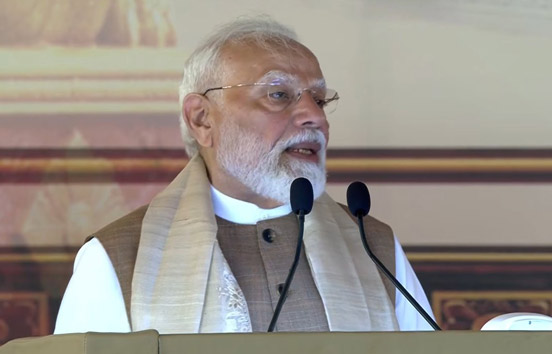
New Delhi: Prime Minister Narendra Modi has highlighted the role of homoeopathy in India’s healthcare system, sharing an article by Ayush Minister Prataprao Jadhav on the occasion of World Homoeopathy Day.
In a post on X, the Prime Minister said the article explains how homoeopathy has evolved into an integral part of India’s pluralistic health and wellness system, offering a holistic and patient-centric approach. He noted that homoeopathy, with its strong community connect and sustainable model, can contribute to achieving the goal of a “Viksit Bharat”.
In addition, Jadhav also stated, “When thousands of patients find hope in homeopathy patients every day, it proves that the people of India have unwavering faith in this system for solving their health problems.”
Moreover, earlier, the government said that homoeopathy has witnessed growing global acceptance over the years, particularly in community healthcare and public health interventions.
It also stated that efforts have been made to expand its reach through evidence-based practices, improved accessibility and integration into national health programmes.
On the occasion, Vaidya Rajesh Kotecha, Ayush Secretary, highlighted the synergy among traditional systems such as Ayurveda, Siddha, Unani and homoeopathy, noting their shared focus on patient-centric and nature-based healing.
He also emphasised that homoeopathy has demonstrated effectiveness in managing both chronic and infectious diseases, including during the Covid-19 pandemic, while technological initiatives like ‘Aura’ and ‘AYUSH ID’ are improving accessibility and transparency in healthcare delivery.
Homoeopathy was introduced in India in the early 19th century and has since grown into a significant component of the country’s alternative medicine ecosystem.
India currently has around 3.45 lakh registered homoeopathy doctors, over 8,500 dispensaries, 277 educational institutions and 34 research centres, according to the government.
From ‘pharmacy of world’ to innovation hubNew Delhi: Prime Minister Narendra Modi said that India’s pharma sector is moving up from the pharmacy of the world to a hub of innovation. Highlighting the country’s growing focus on research-driven growth, PM Modi highlighted India’s transition from a global supplier of affordable medicines to an emerging centre of pharmaceutical innovation. Sharing an article authored by Union Health Minister Jagat Prakash Nadda, he said that India’s pharma sector is steadily moving up the value chain, with a strong push towards research and development, biologics, biosimilars and next-generation therapies. “From the pharmacy of the world to a hub of innovation, India’s pharma sector is moving up the value chain,” PM Modi said in a post on X. “Under the present government, the focus has been on extensive R&D, biologics, biosimilars and cutting-edge therapies,” Prime Minister Modi explained. The post described Nadda’s article as a “must-read retrospection” on how the country is positioning itself to lead the global pharmaceutical race. The article outlines how policy support and sustained government focus have helped reshape the sector’s trajectory in recent years. It emphasises that India is no longer limited to producing generic medicines at scale but is increasingly investing in advanced research capabilities and complex drug development. “Long termed as the ‘Pharmacy of the World’ due to its leadership in generic medicines, India’s pharma industry is now ready to shift gears from scale to innovation,” Nadda said in its article. |