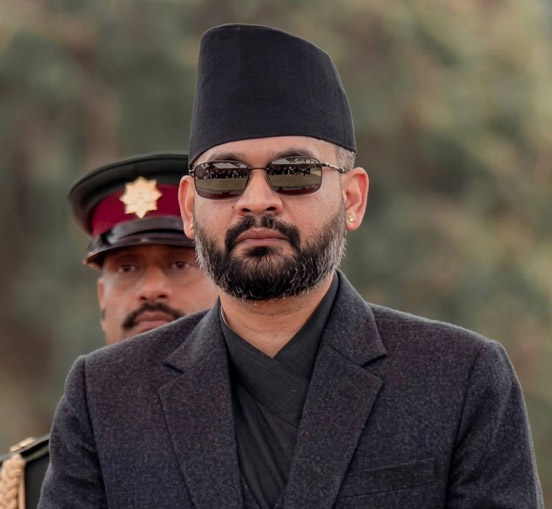
Nepal’s political landscape was thrown into turmoil this week as student groups and opposition parties staged protests against Prime Minister Balendra “Balen” Shah over his controversial remarks suggesting that Nepal had also encroached on Indian territory in some areas.
The controversy erupted after Shah told Parliament that border issues between Nepal and India were not entirely one-sided and that Nepal, too, had occupied Indian land in certain places. The statement triggered immediate backlash from opposition lawmakers, who accused the prime minister of undermining Nepal’s longstanding position on territorial disputes with India.
Student organizations gathered at Kathmandu’s Maitighar Mandala, a popular protest site, demanding that Shah withdraw his comments. Demonstrators carried placards and chanted slogans calling for the protection of Nepal’s sovereignty, arguing that the prime minister’s remarks weakened the country’s claims over disputed territories, including Kalapani, Lipulekh, and Limpiyadhura.
The opposition intensified its campaign inside Parliament, demanding that Shah apologize and that his remarks be removed from the official parliamentary record. Opposition lawmakers disrupted proceedings in both the House of Representatives and the National Assembly, forcing repeated adjournments.
Major opposition parties warned that they would continue obstructing parliamentary business until the prime minister clarified his statement. Critics argued that Shah’s comments could weaken Nepal’s diplomatic position in its long-running border dispute with India.
The issue has also drawn attention in India. New Delhi reiterated that the remaining boundary issues between the two countries should be resolved through existing bilateral mechanisms and rejected suggestions of any third-party involvement in the process.
The border dispute between Nepal and India centers on the Kalapani, Lipulekh, and Limpiyadhura regions, with both countries claiming the strategically important areas. The disagreement traces its roots to differing interpretations of the 1816 Sugauli Treaty and has periodically strained bilateral relations.