By Manoj Kumar Mishra
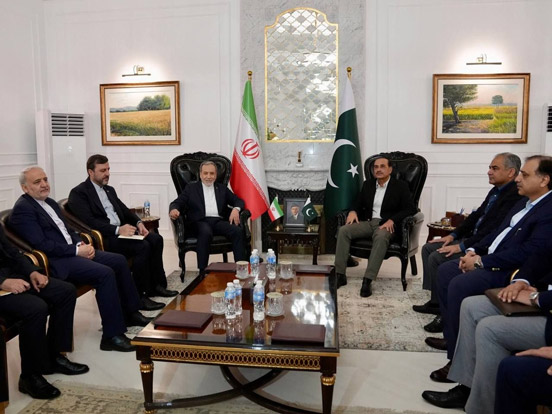
As the war in the Middle East intensified, Pakistan’s role transitioned from being a mere observer of the conflagration to an active diplomatic intermediary between the US and Iran. The country quickly began to draw international attention as it started hosting negotiations between the US and Iran, which was key to the de-escalation of tensions in the Middle East, central to international peace and energy security.
Pakistan was considered uniquely placed to carry forward the role of a mediator as it shares healthy bilateral ties with both states - Iran and the US. Pakistan's geographical contiguity with Iran and their 900-kilometre-long shared common border in Pakistan’s western flank became susceptible to direct security ramifications of the war.
Pakistan continues to face a resilient Baloch separatist insurgency on its western flank. An expanded conflict in Iran would likely strengthen cross-border militant networks, further destabilizing Pakistan’s security environment. From an economic standpoint, the war hit Pakistan’s already rickety economy, and its economic interests were seriously undermined by the energy blockades imposed by Iran and subsequently by the US.
Pakistan is heavily dependent on oil shipments transiting the Strait of Hormuz, and the war precipitated sharp increases in fuel prices, imposing significant economic and energy-related shocks. Strategically, Pakistan was concerned that a protracted war could impinge on its relationship with Saudi Arabia, with which it has entered into a defence pact in 2025.
Pakistan sought to address its economic and security concerns while capitalising on the strength of its ties to the parties of the war to improve its regional and global standing. However, mediating between two warring states has never been easy. For instance, casting serious doubt on Pakistan’s capacity to serve as a mediator, Ebrahim Rezaei, spokesperson for Iran’s National Security and Foreign Policy Commission, asserted that Islamabad “always takes US President Donald Trump’s interests into account and does not speak against the Americans’ wishes.”
Pakistan’s leverage and ambitions
Pakistan sought to take up the role of a mediator eagerly, not only to address its core economic and security concerns but to expand its influence as well. With its mediation, Pakistan sought to prove to the US that it could fulfil Washington's vital strategic interests.
Pakistan has undertaken sustained outreach to the Trump administration, including to President Donald Trump personally and his family, in an effort to enhance its influence in Washington. Whereas it was marginal to the US policy during the first Trump administration — and was at times publicly criticized by the President — it has demonstrated strategic utility in the second term, establishing a basis for bilateral cooperation.
Pakistan also maintains robust relations with Iran, with which it not only shares an extensive land border but also maintains close relations with Iran, underpinned by historical ties, religious affinity, and border cooperation. With the world’s second-largest Shiite population, Pakistan possesses significant cultural and sectarian influence in Tehran.
On the other side, it has entered into a defense pact with Saudi Arabia, a key party to the current crisis, and retains strong ties with China, which is significantly impacted by the attendant energy crisis. By mobilizing these relationships, Pakistan seeks to assume a mediating role, projecting a degree of geopolitical clout that would have appeared unlikely several years ago.
In the past decade, it contributed to mediation efforts between Saudi Arabia and Iran and facilitated dialogue between Afghanistan and the US. This time, however, successful mediation presented a strategic opportunity to cultivate strong ties with various stakeholders. It is widely believed that brokering an agreement would further enhance Pakistan’s bilateral ties with the US, Iran,
and the Arab Gulf states, while elevating its geopolitical standing within South Asia.
While China is and has been Pakistan’s most consistent strategic partner, Islamabad has sought to avoid overreliance on Beijing by diversifying its external relations. While it aims at cementing ties with the US to an unprecedented extent, it seeks to strengthen its relations with the Gulf states and the Middle East more broadly. Through these diversified partnerships, Pakistan aims to enhance its geopolitical influence and to hedge against Indian power within South Asia.
India must have been awkwardly watching as Pakistan secured influence in Washington by placating President Trump through the nomination of Trump for the Nobel Peace Prize and by getting a few bilateral agreements signed, with its relative insulation from Trump's tariff bludgeon.
The Trump administration's inclusion of Pakistan in the US-led “Board of Peace” in the Middle East also indicated Pakistan's growing influence in the US as well as in the region. While India must be concerned with Pakistan's rising influence in the region and in Washington, Islamabad’s shattered economy, its recent war with Afghanistan, and continuing insurgency and secessionist movements within inhibiting its internal strength, must have informed New Delhi that the existing balance of power between the two states will prevail for a long time to come.
---------------------------------------------

[Dr Manoj Kumar Mishra is a senior lecturer of Political Science at SVM Autonomous College in Jagatsinghpur, Odisha, India]
The views expressed are not necessarily those of The South Asian Times