[The opinions expressed in this article are those of the author. They do not purport to reflect the opinions or views of The South Asian Times.]
By Ayesha Rafiq
The Louvre theft is not an isolated crime. It is a wake-up call for every country that keeps its history behind glass and assumes that glass will hold.
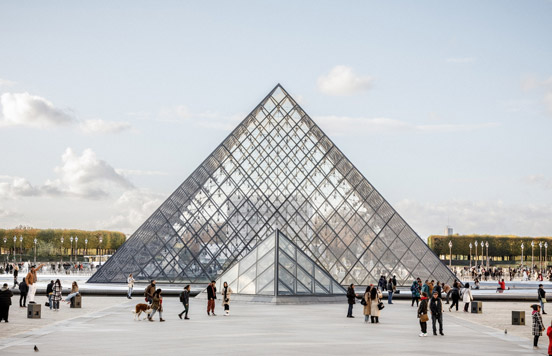
When thieves in broad daylight scaled the façade of the Louvre Museum in Paris, entered the Galerie d’Apollon, shattered glass display cases, and vanished within seven minutes carrying royal jewels worth nearly €88 million, the alarm bells rang far beyond the museum’s security systems. What unfolded that morning was not merely a robbery, but a moment of revelation: a reflection on fragility, on the thin glass between civilization and chaos, between possession and loss.
According to the Paris prosecutor, the stolen items once belonged to France’s queens and empresses, Marie-Amélie, Hortense, and Eugénie. They were history made tangible, fragments of monarchy that survived revolutions, wars, and time itself. To see them disappear so easily was to witness more than theft. It was to feel the breath of mortality upon what we thought eternal. This crime was not just about jewels. It was an assault on continuity, on the belief that culture endures even as empires fall. The Louvre, that cathedral of civilization, became a stage for the oldest human drama: desire versus protection. Those gleaming cases, meant to separate reverence from reach, proved fragile. The thieves’ seven-minute sprint made centuries of security feel like illusion.
Prosecutor Laure Beccuau’s statement captured the truth succinctly: the financial damage is nothing compared to the historical damage. To steal a diamond tiara that once adorned an empress is to rob a piece of identity. To breach the Louvre is to shake the moral architecture of Europe itself. For a moment, Paris, the city of light, became the city of loss. The details are cinematic. A furniture truck equipped with a lift. Two men in construction vests ascending to a first-floor balcony. Glass shattered, jewels scooped, alarms triggered, motorcycles roaring away. Four hundred seconds of orchestration. Within hours, investigators found abandoned helmets and gloves; within days, two suspects were arrested, one at Charles de Gaulle airport and another in Seine-Saint-Denis.
The heist is being studied not only as a breach of security but as a case study in human audacity. The Louvre, one of the most visited museums on earth, was humbled by precision and nerve. For all its marble and majesty, it proved as vulnerable as any common vault.
What this heist reveals cuts deeper than broken glass. It exposes a paradox at the heart of civilization: that we display wealth to prove permanence, only to invite its disappearance. These jewels once symbolized royal power. Now they symbolize something more ironic: the fleetingness of ownership. The Louvre’s glittering gallery has become a mirror, reflecting how even the most guarded symbols can vanish in an instant. It is a lesson not only for France but for all nations that equate prestige with possession.
In moments like this, the global nature of heritage becomes clear. Pakistan, too, knows the ache of loss and the pride of preservation. From the Gandhara sculptures stolen from Peshawar’s ancient monasteries to Mughal artifacts smuggled abroad, Pakistan has long been a witness to the fragile line between heritage and theft. Yet Pakistan also stands as a model of cultural endurance.
Its museums in Lahore, Karachi, and Taxila preserve treasures that survived empires, floods, and wars. Each relic, whether a Buddhist frieze or a Mughal miniature, tells the same story that Paris now re-learns: art and memory cannot be locked away forever. They live in the people who remember them. If there is a message the Paris heist offers to the world, it is this: true guardianship of heritage does not belong to cameras or guards. It belongs to nations that understand suffering and still choose preservation. Pakistan, with its bruised yet unbroken legacy, embodies that truth.
The Louvre theft is not an isolated crime. It is a wake-up call for every country that keeps its history behind glass and assumes that glass will hold. From Cairo’s Museum of Antiquities to Delhi’s National Museum, from Mexico City to Tehran, security is tightening and anxiety is rising. Cultural institutions now confront an uncomfortable duality: they are both sanctuaries and targets. The same global networks that traffic digital data also move stolen antiquities with silent efficiency. The Louvre’s loss reminds us that cultural wealth is both treasure and temptation.
France’s embarrassment is total. How could the fortress of global art, home to the Mona Lisa and the Venus de Milo, be so easily breached? Yet perhaps the more profound question is this: what exactly were we protecting? Gold and gems, or the illusion that they were untouchable? Theft has a way of forcing introspection. It forces societies to look not just at what was stolen, but at what was neglected. The Louvre’s missing jewels may one day be recovered, but the real recovery must be of humility, the recognition that heritage, no matter how grand, depends on vigilance, not vanity.
The Paris heist may seem distant from the flood plains of Sindh or the bazaars of Lahore, but the message resonates everywhere. Whether in Europe or South Asia, we are custodians of memory, not owners of it. When one nation’s crown jewels vanish, every museum, every monument, every archive in the world feels a tremor. Culture does not belong to a postcode. Its loss is collective, its protection a shared duty. Pakistan’s archaeologists, France’s curators, and Egypt’s conservators all fight the same invisible war against amnesia and greed.
Seven minutes of theft, a century’s worth of reckoning. The Louvre’s silence now echoes louder than the clatter of its alarms. Empty vitrines speak more eloquently than any recovered jewel could. Perhaps that is the paradox of beauty: it draws us in, but it cannot defend itself. The jewels may resurface one day, glittering again under the same Parisian lights. But what endures longer
is the question they leave behind: how do we protect not just objects, but the meaning within them?
For now, Paris mourns. The Louvre tightens its gates. The world watches. And somewhere, between the alleys of Montmartre and the plains of Multan, the same truth hums quietly: what defines a civilization is not what it owns, but what it chooses to remember.
-------------------------------------------------

(Ayesha Rafiq is a Distinguished Policy Analyst and a Top-Ranking Graduate in Peace and Conflict Studies from National Defence University, Islamabad. As a published writer, Millennium Fellow, and advocate for social equity, she blends academic rigor with practical experience to craft compelling analyses on global affairs, climate policy, human rights, and emerging technologies. She can be reached at - [email protected])