[The opinions expressed in this article are those of the author. They do not purport to reflect the opinions or views of The South Asian Times.]
As the world marks 80 years of the UN, the question is not whether the institution can survive, but whether it can still inspire.
By K S Tomar
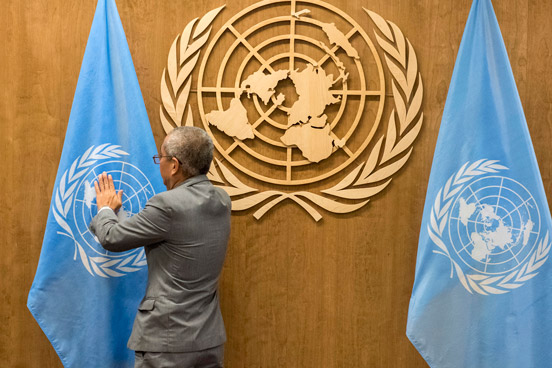
Eighty years after its founding in the ashes of World War II, the United Nations stands at a critical crossroads. Conceived as the guardian of global peace and a moral voice for humanity, it now risks sliding into irrelevance amid growing great-power rivalry, institutional paralysis, and a crisis of credibility. What began as a beacon of hope for multilateral cooperation is increasingly viewed as an outdated bureaucracy trapped between the competing egos of major powers.
A vision lost in translation
When the UN Charter was signed in 1945, it embodied a noble aspiration — to prevent war, promote human rights, and ensure social progress “in larger freedom.” Yet the geopolitical context of that era was entirely different. The world the UN was built to serve — dominated by victorious Allied powers — has changed beyond recognition. Decolonization, globalization, and now digital transformation have created new power centres, but the UN’s structure remains frozen in 1945.
The most glaring example of this is the Security Council, whose five permanent members — the United States, Russia, China, Britain, and France — still hold veto powers, a privilege that has repeatedly paralyzed the organization. In recent years, the UN has failed to act decisively on critical issues — from the Ukraine war and Gaza conflict to the Sudan civil war — largely because of great-power obstruction. The result is a loss of faith among smaller nations that once saw the UN as a platform for justice and equity.
Decline in authority and effectiveness
The decline of the UN is not sudden; it has been gradual and multifaceted. Its humanitarian arms, like the World Food Programme and UNHCR, continue to do admirable work, but its political organs — especially the Security Council and General Assembly — appear helpless in shaping outcomes.
In the Cold War, paralysis stemmed from ideological conflict between the US and the Soviet Union. Today, it arises from strategic competition between the US and China, with Russia as a spoiler. The Security Council’s inability to censure Russia over Ukraine or to forge consensus on Gaza reveals an institution caught in the undertow of global power realignment. The erosion of faith in international law, symbolized by selective humanitarian interventions and unchecked vetoes, has turned the UN into a forum for rhetoric rather than resolution.
Assault on multilateralism
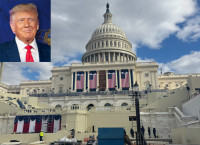
If the UN’s decline has an accelerant, it is the rise of unilateralism, epitomized by Donald Trump’s first presidency (2017–2021) and renewed posture since his return to power in 2025. Trump’s worldview — transactional, nationalist, and sceptical of global institutions — directly undercut the UN’s moral legitimacy.
During his earlier tenure, the United States withdrew from the Paris Climate Accord, defunded UNRWA, and cut contributions to WHO and UNESCO. His administration reduced US engagement with UN peacekeeping operations and dismissed the concept of “global governance” as contrary to American sovereignty.
Now, Trump’s second term has revived that “America First” agenda, with fresh calls to slash US funding to multilateral bodies deemed “anti-American.” Such moves have further weakened the UN’s financial base — the US contributes nearly 22% of its regular budget and 27% of its peacekeeping costs — making the institution vulnerable to political blackmail. The resulting vacuum has emboldened regional powers to pursue unilateral strategies, from Russia’s actions in Eastern Europe to China’s assertiveness in the Indo-Pacific.
Impact on global politics
The UN’s diminishing credibility has broad implications for world politics. Without an effective global arbiter, conflicts are now resolved — or escalated — through coalitions of convenience. Regional organizations like NATO, ASEAN, and the African Union increasingly perform roles the UN should have led.
The humanitarian system, too, is under strain. With over 120 million displaced persons worldwide, UN agencies face funding shortages and bureaucratic fatigue. Climate change, pandemics, and cyber threats — transnational in nature — require precisely the kind of global coordination the UN was designed to offer but now struggles to deliver.
Moreover, the erosion of faith in multilateralism is encouraging authoritarian populism. Governments now routinely bypass UN mechanisms, preferring direct diplomacy or military assertion. The very idea of a rules-based order, which sustained global peace for seven decades, stands at risk.
India’s role: From founding voice to reform advocate
India’s engagement with the UN reflects both idealism and frustration. As a founding member and a key contributor to peacekeeping operations, India has historically viewed the UN as a stage for asserting moral leadership. From Jawaharlal Nehru’s non-alignment diplomacy to India’s advocacy of decolonization and disarmament, the UN was once a natural ally in New Delhi’s pursuit of global justice.
However, India’s growing economic and strategic clout has altered its perspective. Today, it sees itself as a victim of institutional stagnation — a major power excluded from the Security Council’s permanent membership. Despite representing one-sixth of humanity and contributing significantly to global peacekeeping, India remains on the sidelines of key decision-making.
Prime Minister Narendra Modi’s repeated call for UN reform — echoed by External Affairs Minister S Jaishankar — underscores India’s belief that global governance must reflect “contemporary realities.” India argues that no structure can be legitimate if it ignores the voices of the Global South, particularly Africa, Latin America, and South Asia.
India’s current role also reflects strategic pragmatism. It engages with the UN where it serves its interests — on climate change, counterterrorism, and peacekeeping — while increasingly turning to alternative platforms like G20, BRICS, and QUAD for meaningful action. This “multi-aligned” diplomacy marks a shift from idealism to realism, positioning India as both a reformer within and a challenger outside the UN framework.
The road ahead: Reform or redundancy
For the UN to regain relevance, structural reform is unavoidable. The Security Council must be expanded to include rising powers like India, Japan, Germany, and Brazil (the G4), along with permanent African representation. Decision-making must move beyond veto paralysis, possibly through a system of weighted voting or regional representation.
Equally urgent is a financial overhaul to reduce dependency on a few large donors. Greater autonomy for humanitarian agencies, stricter accountability mechanisms, and digital transparency could restore public trust. The UN must also reinvent its peacekeeping and climate action mandates for the AI-driven 21st century.
Conclusion: Between hope and history
The United Nations remains both indispensable and inadequate — indispensable because no other global body can command universal legitimacy, and inadequate because it no longer mirrors the geopolitical realities it is meant to govern.
Its decline is not inevitable, but revival demands courage — from within and from member states willing to share power. As global crises multiply, the choice is stark: reform the UN or risk a world without rules.
For India, the task is to lead by example — to combine moral conviction with pragmatic diplomacy, to strengthen multilateralism without surrendering autonomy. As the world marks 80 years of the UN, the question is not whether the institution can survive, but whether it can still inspire.
------------------------------------------------
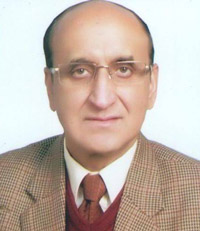
(K S Tomar is a strategic affairs columnist and senior political analyst based in Shimla)