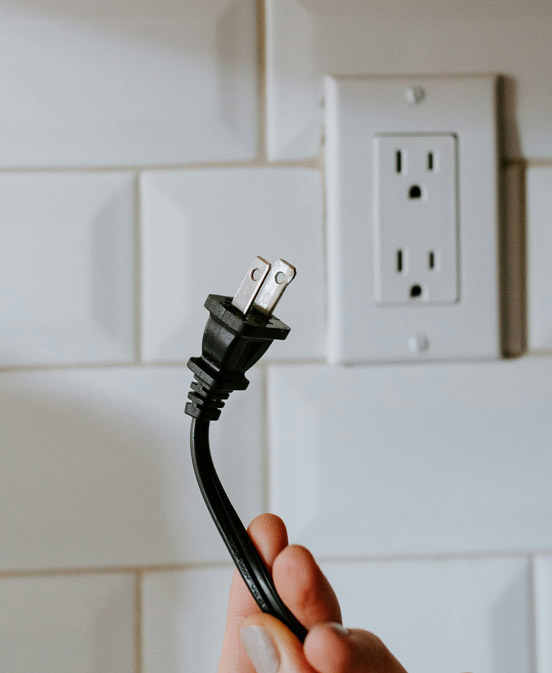
While driving the other day, I spotted a bumper sticker that said this: “Has anyone tried unplugging the country and plugging it back in?”
If only that were possible. Many people around the world would want to unplug their countries and get them to function well again. The area around each plug would be heavily guarded, with a chain-link fence around it. Only those with security clearance would be permitted near the plug. Others would buy tickets to view the plug from a distance, using binoculars to get a closer look.
Husband (peering through binoculars): “Wow, it’s bigger than I thought. And there are letters on the side of it.”
Wife: “What does it say?”
Husband: “It says, ‘Made in China.’”
Wife: “Does it say anything else?”
Husband: “Yes, it says, ‘Do not unplug during the World Cup.’”
The idea of “unplugging” a country is amusing to me because “unplugging” is one of the first things I do when an electronic device gives me trouble. In the case of my laptop computer, I don’t need to unplug it—I just restart it, which prompts it to update what it had updated the day before. In the case of my printer, I pull the plug out of the socket and replug it right away. And just like that, it starts printing something I had tried to print three years ago.
Unplugging also works with my digital clock radio, microwave, wifi router, and TV. Why does this work? Well, by cutting off a device’s power, you are saying to the device, “Guess who’s the boss? You don’t answer to Microsoft, Apple or Google—you answer to me, the guy holding the plug.” You are basically threatening to stop feeding the device, similar to when a parent says to a child: “You’d better start behaving yourself or I will send you to bed without dinner.”
If you ask the experts, however, they will tell you that unplugging a device works because many devices have tiny computers with built-in software. When you unplug them, you are causing the “internal computer to reboot, which clears out the device’s memory and forces it to reload and re-execute the software from scratch,” according to technology writer Benj Edwards, author of an online article titled “Why does unplugging a device fix so many problems?”
If unplugging a device helps it function better, does unplugging offer the same benefit to a human? Humans unplug in many ways. Some unplug themselves from their phones. Some unplug themselves from social media. Some unplug themselves from their crazy relatives.
That isn’t the same kind of unplugging, of course. Few humans would want to have an actual plug, but many would probably be okay with a reset button. A reset button would clear a person’s memory, allowing them to feel like a new person. Some people might choose a “hard reset,” restoring themselves to factory settings. Others would choose a “soft reset,” clearing just their recent history.
A reset button would be even more effective than flying Air India, allowing you to lose a lot of the baggage you carry around.
If we did have a reset button, we wouldn’t want anyone else to have access to it. Otherwise too many of us would be crawling around, sucking our thumbs—like we just left the factory.