The Kanwar Yatra is an age-old Hindu pilgrimage. The devotees, called Kanwariyas, carry holy water from the Ganga River to offer at Shiva temples, particularly during the month of Sawan. This pilgrimage has evolved over centuries into one of the largest religious gatherings in the world, reflecting the enduring devotion to Lord Shiva.
New Delhi: Every year during the monsoon month of Sawan (July–August), millions of devotees embark on a sacred journey on foot, carrying Kanwars. These are bamboo poles with water-filled pots. They carry water from holy rivers like the Ganga to pour over Shiva Lingas in temples across India. This deeply spiritual tradition is known as the Kanwar Yatra. While it appears to be a modern mass movement, its roots stretch deep into Hindu mythology.
The mythological origins
The origins of the Kanwar Yatra are closely linked to one of the most famous episodes from Hindu mythology, the Samudra Manthan, or the churning of the ocean. According to legend, during the great churning of the Ocean (Samudra) by the devas and asuras, a deadly poison called Halahala emerged. It was threatening enough to destroy the universe. To save creation, Lord Shiva consumed the poison and held it in his throat. His throat turned blue, earning him the name Neelkanth.
To ease his suffering and cool the poison's effects, the devas and sages began offering holy water from the Ganga River to Lord Shiva. This act of devotion is considered the symbolic origin of the Kanwar Yatra. It is an offering of gratitude and healing to the great lord. Today, the same practice is replicated by millions who carry Ganga water and offer it to Shiva temples. It is believed to bring divine blessings and remove sins.

Devotees carry holy water and Lord Shiva idols during the Kanwar Yatra. (Photo: X@PBSHABD)
Historical and cultural significance
The mythological foundation is ancient. However, historical evidence suggests that the Kanwar Yatra, as a widespread public event, became prominent during the medieval period. Devotional saints like Tulsidas and Surdas referred to the practice of carrying water to Shiva temples in their compositions. The pilgrimage was primarily rural and unorganized for centuries. It started with small groups of devotees walking silently to their local Shiva shrines.
In the 20th century, the Kanwar Yatra witnessed a massive surge in participation. Improvements in road networks, religious awareness and community support made it a large-scale event. What was once a quiet act of devotion evolved into a vibrant and collective expression of bhakti (devotion).
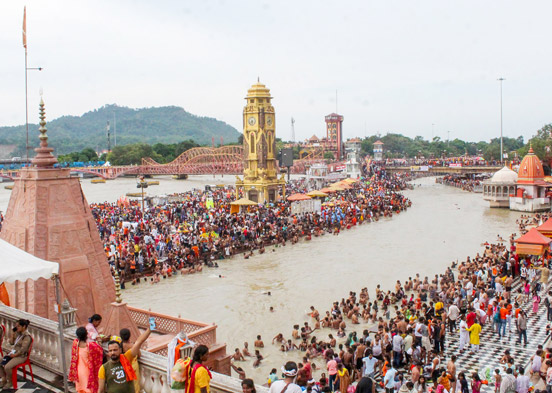
Today, the largest destinations for Kanwariyas include Haridwar, Gaumukh, and Gangotri in Uttarakhand, and Sultanganj in Bihar. From these places, devotees walk long distances, often up to 100-200 kilometres, to reach major Shiva temples like Baba Baidyanath Dham in Deoghar, Kashi Vishwanath, or Neelkanth Mahadev near Rishikesh.
Rituals, discipline and devotion
The Kanwar Yatra is more than a physical challenge. It is a deeply personal spiritual experience. Devotees observe strict disciplines during the journey. Many do the Dak Kanwar, a fast-paced version where water must be poured on the Shiva Linga without the pot touching the ground.
Camps, known as Kanwar camps, are set up by volunteers along the routes. Such camps provide free food, medical aid, and rest. Bhajans, chants of “Bol Bam,” and devotional music fill the air. This turns highways into mobile temples. Despite the crowds, the spirit of service and shared purpose keeps the journey sacred and orderly.
A living tradition of devotion
The Kanwar Yatra is not just a pilgrimage. It is a celebration of faith, endurance and community. Its endurance over centuries indicates how spiritual traditions adapt and grow with time. Whether seen as a reenactment of divine myths or a path to inner purification, the Kanwar Yatra is a powerful expression of living devotion to Lord Shiva.