By Pandit Hemant Ramrakhyani
Navaratri is a nine-night festival dedicated to the worship of the Navadurga (nine forms of Goddess Durga). The tenth day of the Shukla Paksha of Ashwin month, Dashami, is celebrated as Vijayadashami, meaning “the day of victory.” It is also considered as the victory of virtues and the renewal of Dharma. Thus, it is both the culmination of Navaratri and the beginning of new auspicious ventures.
Historical and Spiritual Significance
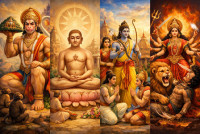
Vijayadashami carries multiple descriptions drawn from sacred epics and religious texts. According to the Ramayana, this day commemorates the victory of Lord Rama over the demon king Ravana, symbolizing the defeat of Adharma (unrighteousness) and the victory of Dharma (righteousness). Large effigies of Ravana, along with his brother Kumbhakarna and his eldest son Meghnath, are burned in public grounds, serving as a powerful reminder that arrogance and evil intentions must eventually die before the truth.
As per another description, Vijayadashami also marks the day on which Goddess Durga defeated the buffalo demon Mahishasura after a violent nine-day-long battle. This Katha is linked to Navadurga worship during Navaratri, highlighting the power of the Divine Feminine that restores balance and harmony in the cosmos.
Since the early 17th century, in Karnataka, under the rule of the Wadiyar dynasty, who began celebrating the Vijayadashami, known as Mysore Dasara, in a majestic way. Here, the Vijayadashami festival is linked to Goddess Chamundeshwari, who slayed the buffalo demon Mahishasura atop Chamundi Hills, symbolizing the eternal victory of good over evil. For the people of Mysore, Dasara is both a devotional observance and a cultural celebration uniting spirituality with ceremony and spectacle.
Spiritual Meaning
Beyond its historical and cultural narratives, Vijayadashami carries eternal spiritual teachings.
Modern Relevance
In today’s world, the message of Vijayadashami is more relevant than ever before as humanity struggles with social divisions, materialism, and moral dilemmas, and this festival reminds us that truth, justice, and compassion must prevail. Burning Ravana is not merely a ritual but a symbolic call to burn away our prejudices, hatred, and unethical practices that plunder society.
It also motivates people to recognize the importance of empowering women, as the stories of Durga’s victory highlight the strength of the feminine principle in maintaining cosmic order. Vijayadashami, thus, becomes a festival not only of devotion but also of a reflection, urging society to uphold values of equality, respect, and righteousness.
Vijayadashami Celebration in Karnataka
Karnataka, with its unique traditions, celebrates Vijayadashami, often called Mysore Dasara, as the Nada Habba or the “State Festival of Karnataka” with royal, cultural, and spiritual grandeur. In 2025, the most spectacular Royal Festival of Lights, Devotion, and Culture will be observed from September 22 to October 2, 2025, culminating in the grand Vijayadashami procession. This eleven-day extravaganza not only honors Goddess Chamundeshwari’s victory over the demon Mahishasura but also showcases Karnataka’s rich traditions, heritage, and artistry on a global stage with the following highlights.
The Significance of Durga Puja in Bengal
In Bengal, Durga Puja is celebrated as Goddess Durga’s victory over Mahishasura, the buffalo demon. This triumph symbolizes the eternal truth: good will always prevail over evil, and divine energy will restore cosmic balance. The festival usually spans five days—Shashti to Dashami—but its preparations and spirit permeate weeks in advance, transforming the state into a canvas of lights, colors, and artistry. In Bengal, the goddess is revered not only as a divine warrior but also as a daughter returning to her maternal home with her children.
Bengal’s artistry and creativity can be seen in their grand Pandal designs, often themed on heritage, social issues, or contemporary art. Community Spirit is displayed by the festival uniting neighborhoods, families, and communities in collective celebration. Music, dance, and literature programs are arranged everywhere.
Vijayadashami is far more than a celebration of historical and spiritual victories—it is a festival of self-purification, moral renewal, and collective harmony. In the flames of Ravana effigies, or the serene immersion of Durga idols, or the auspicious beginning of new ventures, the essence of the festival remains unchanged: dharma must always triumph over adharma.
As communities gather across India and abroad to celebrate Vijayadashami, the festival reminds us that the spirit of goodness is strong, and with faith and courage, every individual can emerge victorious over the battles of life.
On this sacred day of Vijayadashami, may the divine blessings of Maa Durga and Sri Rama fill your lives with strength, wisdom, and victory. For more information on the upcoming events and services, please visit temple website at: https://satyanarayanmandir.org/