Iran has warned that any breach of its interim agreement with the United States would trigger a severe reaction, while Tehran’s military has also threatened retaliation against Israel over continued attacks in southern Lebanon despite the announcement of a deal aimed at ending the wider regional conflict.
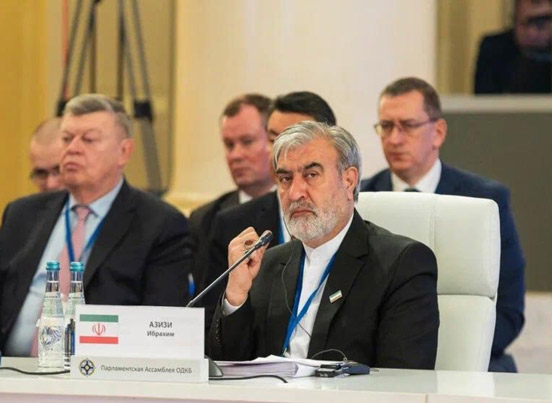
Ebrahim Azizi, who heads the Iranian parliament’s National Security and Foreign Policy Committee, said any violation of the memorandum of understanding (MOU), which is scheduled to be formally signed on Friday, would be met with a “crushing response”.
In a social media post, Azizi said, “Iranian resilience forced a strategic pivot: the US came to the table on Iran’s terms.” He added: “Now, Washington must prove its commitment by ending the war against Lebanon and upholding every clause of the MOU. The era of unilateral imposition against Iranians is over.”
The warning came as Iran’s military accused Israel of repeatedly violating the ceasefire in southern Lebanon. According to the unified command of Iran’s army, Israel has breached the truce 84 times since the US-Iran agreement was announced late last week.
Meanwhile, Iranian and US officials confirmed that negotiations on a permanent settlement will begin in Switzerland on Friday following the signing of the interim agreement. The talks are expected to continue during a 60-day period and focus on Iran’s nuclear programme and the removal of international sanctions.
Iran can shut Hormuz again, US Intel warnsUS intelligence agencies have assessed that Iran can now effectively shut down the Strait of Hormuz whenever it chooses, giving Tehran a powerful new tool to influence the global economy, according to a CNN report. The Strait of Hormuz handles a significant portion of the world’s oil and liquefied natural gas shipments. According to the report, intelligence officials fear that Iran may be more willing to use this capability in future crises after successfully restricting access to the waterway during the recent conflict. US officials fear that simultaneous disruptions in both the Strait of Hormuz and Bab-el-Mandeb could have severe consequences for global trade and energy markets. |