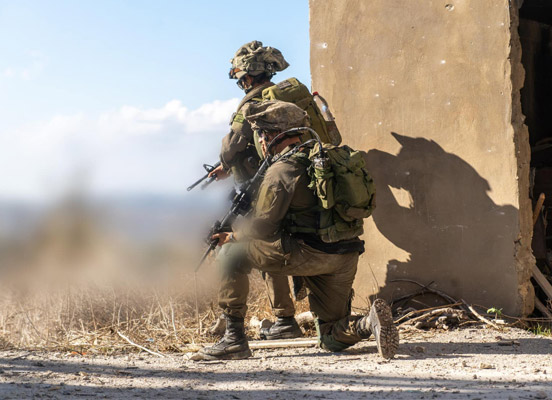
Damascus: Israel has ramped up airstrikes across Syria and carried out significant ground operations, targeting critical military infrastructure in the wake of President Bashar al-Assad's government collapse this week.
The Israeli military said on December 10 that it had carried out about 480 strikes across the country over the past two days, hitting most of Syria’s strategic weapon stockpiles, CNN reported. Defense Minister Israel Katz said the Israeli navy had destroyed the Syrian fleet overnight, hailing the operation as “a great success”.
The Britain-based Syrian Observatory for Human Rights reported Israeli armored units positioned roughly 25 kilometers from Damascus on December 10 morning. Strikes have hit airfields, weapons depots, and strategic sites, including areas near Damascus, Salamiyah in Hama province, and the Qalamoun mountains.
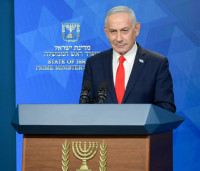
Prime Minister Benjamin Netanyahu declared the events a reshaping of the Middle East, crediting Israeli actions against Hezbollah, Hamas, and Iran with triggering Assad's downfall. Israeli Foreign Minister Gideon Sa'ar said this week that the strikes aimed to neutralize weapons and chemical facilities, preventing their capture by rebel factions. "We are ensuring these capabilities do not fall into the wrong hands," Sa'ar stated at a news conference.
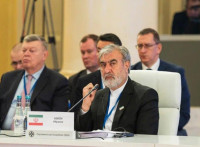
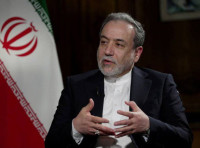
Israel's recent actions align with its long-standing goal to prevent Iranian influence in Syria. Analysts suggest the strikes aim to dismantle lingering threats, including advanced weapons systems and militias tied to the Assad regime. The incursion has drawn criticism from regional countries, including Iran, Iraq, Turkey, and Saudi Arabia, with the international community calling for respect for Syria's sovereignty.
Major updates>> Mohammed al-Bashir announced he has been tasked with heading a transitional government in Syria until early March 2025 following the collapse of the government of Bashar al-Assad. In a brief statement, al-Bashir said he would lead the transitional authority until March 1. >> Former Syrian President Bashar al-Assad is safe in Russia and will not be extradited, according to Russian Deputy Foreign Minister Sergey Ryabkov. Ryabkov confirmed al-Assad's asylum status and security but declined to provide details on the circumstances surrounding his arrival in Russia. >> The opposition, the Syrian National Coalition, vowed to continue working towards the transfer of authority to a transitional governing body with full executive powers, to usher in a free, democratic, and pluralistic Syria after the fall of al-Assad's government. >> UN humanitarians described the situation in Syria as chaotic and fluid, with more than 16 million people in the country requiring assistance. >> US President Joe Biden has been kept up-to-date about the situation in Syria, and his National Security Advisor, Jake Sullivan, is traveling to Israel this week with Syria on top of the agenda, National Security Council Coordinator for Strategic Communications John Kirby said. |