By Hamayun Khan
Pakistan’s security concerns are real—but broad trade blockades are a high-cost response with wider disruption and unintended consequences.
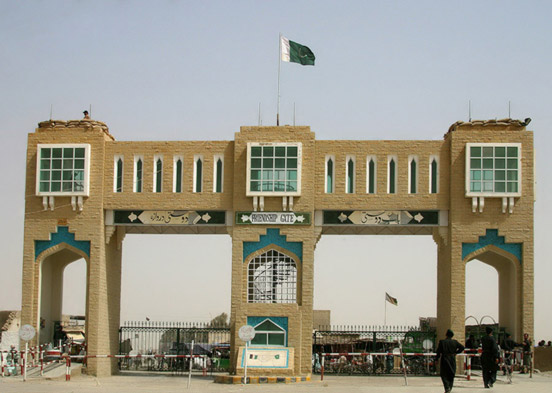
Trade closures between Pakistan and Afghanistan are often presented as security measures. But in practice, they function as a high-cost measure with broad disruption. They raise prices, strand cargo, and shrink trade on both sides. The effects hurt Afghanistan in the short run while eroding Pakistan’s credibility as a maritime transit corridor.
In early October 2025, Pakistan carried out air strikes inside Afghanistan, saying it was targeting Tehreek-e-Taliban Pakistan (TTP) militants. The Taliban responded by attacking Pakistani posts, and several days of clashes followed, including around Spin Boldak. The United Nations Assistance Mission in Afghanistan (UNAMA) later reported 37 civilians killed and 346 wounded in Afghanistan. Qatar and Turkey helped broker a ceasefire announced on October 19, 2025.
But the bigger impact came after the fighting, when trade stoppages began to disrupt markets and supply chains. What is needed are the targeted controls that protect regional stability and lawful, rules-based trade—without blanket closures.
How closures triggered price shocks—and became the new normal
An open Pakistan–Afghanistan trade route works like an economic bloodstream. Thousands of traders and daily workers rely on trucks moving staple food, fuel, medicines, minerals, and cement. When crossings close, the first impact is felt in markets: supply tightens, transport costs rise, deliveries get delayed, and prices respond immediately. Unlike past stoppages, this closure has persisted since October 10, 2025, tightening supply and raising prices.
Trade was already weakening, but post-clash closures deepened the decline. Afghanistan’s Ministry of Commerce and Industry reported bilateral trade at about $2.461 billion in 2024, falling to $1.766 billion in 2025 (down $695 million). Afghanistan’s exports to Pakistan fell from $817 million to $505 million, while Pakistan’s exports to Afghanistan fell from $1.644 billion to $1.261 billion.
This is not just a border issue. Extended shutdowns disrupt regional supply chains and gradually reduce confidence in the reliability of Pakistan–Afghanistan transit for the wider South and Central Asia corridor.
Impact on Pakistan
In Pakistan, closures created an immediate supply shock. Reuters reported tomato prices jumping over 400% to around Rs 600/kg in October 2025, and apples also surged as Afghan supplies tightened. Pakistani officials at Torkham said around 5,000 containers were stranded by late October, with losses estimated at about $1 million per day for each country as trade stalled. Spoilage amplifies the shock; when perishables sit for days, part of the supply is lost. In Khyber Pakhtunkhwa, reporting citing official data also noted a 53.02% decline in revenue linked to the disruption, alongside a sharp drop in Infrastructure Development Cess (IDC) collections.
Impact on Afghanistan
Afghanistan felt the shock through delayed imports and higher transit costs. Residents and shopkeepers reported sharp increases in staples: traders cited rises of 400 to 700 afghanis ($6–$11) in recent weeks. A 16-litre container of cooking oil rose from about 1,550 afghanis to over 2,000; rice from about 2,300 to around 3,000; and flour from roughly 1,400 to about 1,800. One of the most sensitive areas is healthcare. Reports note Afghanistan relies on Pakistan for more than 60% of its medicine, and Pakistan’s pharmaceutical exports to Afghanistan are around $200 million a year—trade now disrupted.
Overall, closures trigger price shocks on both sides—Pakistan through sudden shortages, and Afghanistan through higher import and transit costs that feed directly into staple inflation and essential goods.
The strategic blowback: leverage that can backfire
Repeated trade shutdowns reflect three linked economic patterns: the hold-up problem, supply-chain resilience, and path dependence. The effects may hit Afghanistan first, but can also weaken Pakistan’s long-term corridor role.
First, Pakistan’s geography and port access make it a primary route for landlocked Afghanistan, creating hold-up risk. Traders invest in contracts, customs fees, trucking, and time-sensitive cargo, then face the danger that access is cut without warning. Over time, traders price in political risk, reduce exposure, and the corridor loses credibility.
Second, Afghan firms respond with supply-chain resilience. They diversify routes to reduce dependency, even if alternatives are longer or initially more expensive. Reuters reported in January 2026 that Afghanistan’s 2025 trade stayed relatively resilient as traders shifted cargo via Iran’s Chabahar and overland corridors in Central Asia. The report also cited Afghan commerce ministry data showing total trade rose to nearly $13.9 billion, with exports around $1.8 billion and imports over $12.1 billion, with key imports sourced largely from Iran, the UAE, and China.
Third, Pakistan may bear the consequences of path dependence. Once Afghan firms invest in alternative routes and freight partners, trade does not fully return to Pakistan even when crossings reopen. Over time, repeated shutdowns make the backup corridor the new normal, slowly eroding Pakistan’s corridor credibility and market share in Afghanistan.
De-weaponizing the trade
Trade closures are often framed as security tools, but repeated shutdowns turn political tension into economic loss. Trade should remain regulated and functional, so one decision does not freeze two economies at once. A practical trade-continuity approach would keep essentials and perishables moving through protected lanes at Torkham and Chaman during set hours, while screening shipments by risk through trusted-trader and green/yellow/red channels. Closures, if unavoidable, should be time-bound and reviewed within 48–72 hours through a joint border coordination cell, supported by basic e-documents and scheduled truck slots to reduce demurrage, spoilage, and reopening chaos.
Continued stoppages hurt both economies and weaken long-term stability. Pakistan’s security concerns are real—but broad trade blockades are a high-cost response with wider disruption and unintended consequences. A rules-based continuity framework can protect security without destabilizing markets. It would serve both Afghanistan’s humanitarian needs and Pakistan’s national interests. It would also reduce the cost for households and traders on both sides of the Durand Line.
-----------------------------------------

[Hamayun Khan is an independent researcher, author of The Death Within, and leads SolaTeach, an online learning initiative.]
The views expressed are personal.