By Pradip Jain
Republic Day marks the adoption of the Constitution of India and the country’s official transition from a British Dominion to a sovereign republic on January 26, 1950. Although India achieved independence on August 15, 1947, it was with the enforcement of the Constitution on January 26, 1950, that India became a fully sovereign republic.
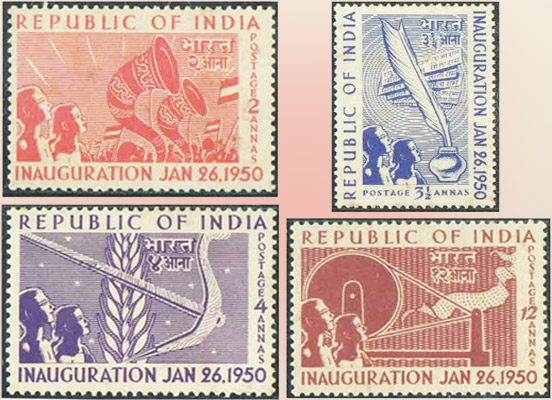
The first commemorative stamps of the Republic of India were issued on January 26, 1950, marking the inauguration of the Constitution. A set of four stamps was released, each symbolizing different aspects of India’s new identity as a republic :
.jpg)
The date January 26, 1950, was chosen to honor the historic Purna Swaraj declaration of 1930, linking the freedom struggle with constitutional self-governance. On this day, India ceased to be a Dominion under the British Crown and became a sovereign republic governed by its own Constitution.
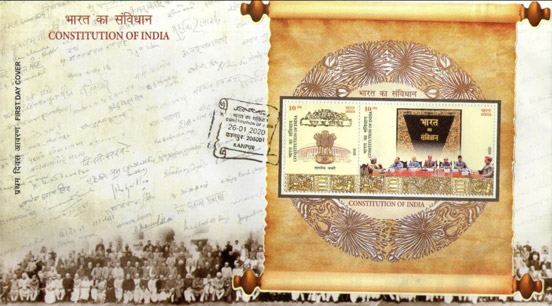
Vande Mataram, written by Bankim Chandra Chatterjee in the 1870s and first published in his novel Anandamath (1882), became a rallying cry during the independence struggle, sung at Congress sessions and protests.
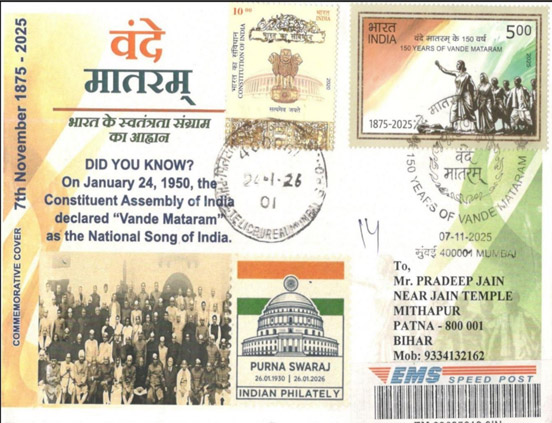
In 1950, when India’s Constitution came into effect, “Vande Mataram” was given the status of National Song, while “Jana Gana Mana” was chosen as the National Anthem. Vande Mataram continues to be celebrated prominently during Republic Day parades, symbolizing cultural unity and patriotic spirit.
(All photos courtesy of the author)