[The opinions expressed in this article are those of the author. They do not purport to reflect the views of The South Asian Times.]
By Basab Dasgupta
The choice between a manual process and automation has always intrigued me. When I attended Calcutta University decades ago, massive protests were organized by employees concerned about their job security whenever there were talks of implementing “automation” in administrative activities. I do not recall any automated process on the campus.
However, most consumer products were produced on assembly lines by automation, for the sake of speed, accuracy, and consistency. A visit to the Haringhata bottling plant gave me my first exposure to an automated process where milk bottles were filled and capped by machines. Since the availability of manual labor seems limitless in India, it makes sense to take advantage of human capital instead of investing in expensive automation driven by computers. The major disadvantage of a manual process is that it is slow and prone to human errors.
Apart from speed and accuracy, automated processes have the advantage that robots can run 24/7 without demanding vacation time. Malfunction of robots, however, can cause major disruptions in both quality and quantity of products; trained technicians must be readily available to fix problems.
The factories in Europe and Japan are the most automated in the world to avoid high labor costs. Labor is expensive in the US also, but to meet the increased demands of products during recent decades, the US companies took the easy way out; instead of automation, they transferred production, especially labor-intensive operations, to low labor-cost countries, first to Mexico and later to Asia. This was the beginning of the end of manufacturing in the US and the onset of China’s global domination in virtually all manufacturable products.
The economic health of a country is closely tied to its domestic manufacturing capabilities. The disappearance of manufacturing jobs from the US also started the gradual decline in the standard of American life. China, on the other hand, became an economic powerhouse. Similarly, manual assembly processes in electronics, drug, jewelry, and textile industries have contributed to the booming economy of India in recent years.
There is an irony in this choice between manual and automated processes. The implementation of manual processes in a low-labor-cost country immediately creates a “laborer” class and a “supervisory” class in the workforce, even though their ideology dictates fighting against this class system. Manual workforces in these countries cater to the wealthy population in capitalist countries.
On the other hand, fully automated systems, which do not even have workers, are perfect for making look-alike products, ideally suited for socialist or communist countries where people are treated equally and expected to behave in a standardized manner. Socialist governments shy away from automation because of the expenses involved and/or the lack of job creation opportunities for the masses.
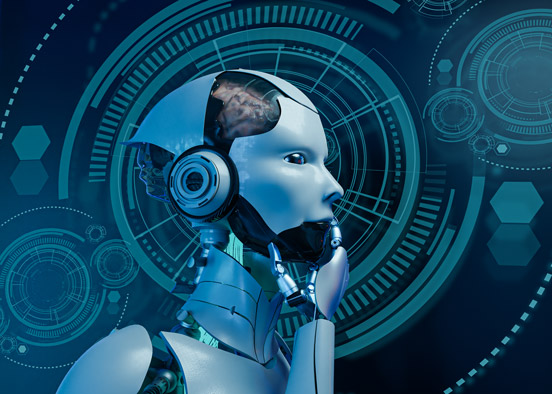
In recent years, we have entered a different era where the level of automation has reached a new high with the introduction of Artificial Intelligence (AI), not just in manufacturing but in virtually all tasks in our lives. AI-driven robots perform complicated functions at lightning speed without errors and also understand commands from human voices. Driverless transportation, automated domestic appliances, and robotic medical care, including surgeries, are already here, not to mention the replacement of all customer service and clerical functions by robots. The earlier automation reduced direct labor from assembly lines; AI-driven robots are eliminating the indirect workforce.
What is happening in China is telling. China has become economically so prosperous that it has been introducing automation, not only in factories but in many aspects of everyday life. Video clips on YouTube of various cities in China and how they operate are mind-boggling. Profit from selling manually made products to wealthy countries is now being invested in automation to modernize the country.
Two questions arise immediately: a) Are automated systems preferable? and b) what will happen to the manual workers rendered unemployed by the introduction of automation? While the advantages of consistency and accuracy of robots are undisputable, when a product is unique, and the process to make it varies from one unit to the next, automation can be both difficult to implement and confusing. Resolution of problems can take hours without a live person. I have been frustrated on multiple occasions while purchasing items with my specific requirements by interacting with AI-driven robots.
Even Elon Musk, the ultimate champion of automation, stumbled upon an insurmountable underground manual operation in a limestone mine in Pennsylvania, where 700 ex-miners manually process retirement paperwork for government employees using hand-written instructions, envelopes, and cardboard boxes. This was necessary because each retiree’s case is different depending on work history, age, departmental policy, etc.
A second drawback of automated systems is their vulnerability to dishonest manipulations. During the startup of an assembly operation for Sony in Mexico, I was shocked to discover that our very capable supervisor of material management was stealing thousands of dollars' worth of copper wire from the warehouse; all information on the computers appeared fine because of his manipulations. The deception was discovered accidentally when a guy from the factory saw the same brand of copper wire that Sony used being sold at a shop downtown.
In the hands of skillful programmers, artificial data can be easily introduced in the system, resulting in “fake data”. Even photographs are forged these days using “deepfake,” making it difficult to see what is real and what is not. In extreme cases, there can be cyber attacks whereby computer viruses can be injected through spurious signals into operating computers to make them erroneous or ineffective.
However, if we ignore these occasional malfunctions and abuses, computerized automated processes are accurate, repeatable, and dependable. For example, I no longer manually balance my checkbook and accept whatever balance amount is shown on bank statements without questioning the bank’s accounting algorithms. It is inevitable that with further improvements and infusion of AI, automation will be the universal choice in every job except the ones that require unique physical manipulations.
As far as the second question is concerned, the “universal basic income” (UBI) is the answer from financial experts. According to them, a handful of mega corporations and/or the government will have enough funds to be able to offer all employees to stay home and do nothing in exchange for a minimum basic income, enough to cover expenses like food, housing, clothing, transportation, etc.
What does the future hold for India? All these current developments might pose a significant dilemma. India has formidable IT power, and there is no question that Indian engineers, whether they are working in India or in the US, will play a significant role in embracing and developing AI. India can follow China’s lead and start automating everything. However, India has flourished with its dominance in labor-intensive jobs and could conceivably continue to prosper indefinitely doing that. China is reportedly seriously considering the deployment of a UBI scheme. UBI may not be an ideal solution in a democratic country like India, where there is a multitude of diverse opinions and less discipline in implementation. In any event, we are at a "watershed moment” in the history of how we utilize the workforce in India.
----------------------------------------------------

(California-based Basab Dasgupta has a doctorate in Physics from the University of Wisconsin and has worked with Sony as Vice President of an operating division)