Pakistan hosted an 'international conference' this week, where it warned that no world order that is on paper would remain secure if the Indus Waters Treaty (IWT) failed. India has kept the IWT in abeyance after the Pakistan-sponsored terror attack in Pahalgam in April 2025.
Pakistan's agrarian economy and power generation depend on the waters of the Indus River System. The suspension of the IWT, signed in 1960, by India has also left Pakistan blindsided on the volume of water in its rivers, as it doesn't have hydrological information for timely action.
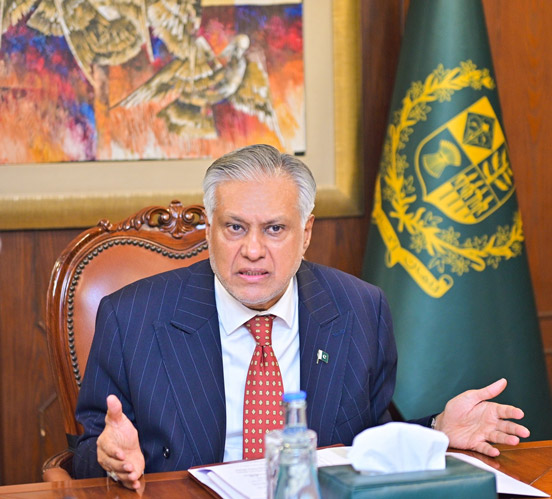
India has time and again made it clear that "blood and water cannot flow together". Pakistan's Deputy Prime Minister and Foreign Minister Ishaq Dar, who addressed the conference, described the IWT as "not merely a water-sharing arrangement but a vital instrument of regional peace, stability, and cooperation".
"Shared waters must never be weaponized. They must remain a bridge between nations, guided by cooperation, dialogue, and respect for international law," Dar wrote on X.
He also warned that any attempt to deprive Pakistan of its rights under the treaty would have "profound consequences" for regional peace and security, affecting the shared interests of nearly two billion people in South Asia.
Pakistan Peoples Party (PPP) chairman Bilawal Bhutto-Zardari asserted Pakistan wanted “peace with dignity" and “dialogue under law", asserting that Islamabad would not compromise on what it described as its water rights.
The IWT is a water-sharing agreement between India and Pakistan, brokered by the World Bank. It allocates the six rivers of the Indus basin between the two countries.
A call to end bilateral hostilityOver 100 prominent figures from India and Pakistan, including several politicians and public figures, have jointly appealed to Prime Minister Narendra Modi and his Pakistani counterpart, Shehbaz Sharif, to take concrete and sustained steps towards restoring peace, dialogue and normal bilateral relations between the two countries. The appeal, issued by the Centre for Peace and Progress and signed by 117 people, 61 from India and 56 from Pakistan, urged the two governments to end the prolonged hostility, saying it was denying millions of young people opportunities, prosperity and a secure future. |