By M A Hossain
When Donald Trump announces a deal, it is usually large, immediate, and framed as historic. When Narendra Modi responds, it is usually careful, affirmative in tone, and precise in omission. The latest claim—that India is abandoning Russian oil in exchange for a modest reduction in US tariffs—fits this familiar pattern. It invites a basic but necessary question: Is this a genuine geopolitical pivot by India, or another episode of Trumpian trade theater dressed up as strategy?
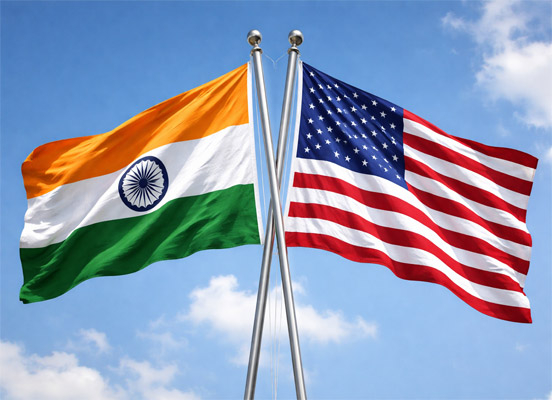
Trump’s assertion is straightforward. After a call with Modi, the United States would reduce tariffs on Indian goods from 25% to 18%. In return, India would stop buying Russian oil, eliminate all tariffs and non-tariff barriers on American goods, and commit to purchasing over $500 billion worth of US energy, technology, agriculture, coal, and other products. Trump framed the deal as a triumph for trade, friendship, and even peace—specifically peace in Ukraine.
Modi confirmed the tariff reduction and welcomed improved trade relations. What he did not confirm matters more than what he did. There was no endorsement of the claim that India would fully cut off Russian oil. In diplomacy, silence is rarely accidental. It is often the policy.
India’s position on energy has been consistent since the start of the Ukraine war. Energy security is national security. India is the world’s third-largest oil importer. It cannot afford ideological purity in its energy mix. In 2022, when Western governments urged New Delhi to shun Russian oil, India declined. It argued—correctly—that global energy markets were unstable and that its primary obligation was to protect domestic consumers from inflation and supply shocks. When Trump made a similar claim in late 2025 that India had promised to stop buying Russian oil, India’s foreign ministry publicly pushed back. The logic then has not changed now.
What has changed is the degree, not direction. India has begun to reduce its imports of Russian crude. From roughly 1.2 million barrels per day earlier this year, imports are projected to fall toward 800,000 barrels per day in the coming months. That is a notable decline. But it is not a rupture. It looks less like capitulation and more like diversification—something India has done before, reducing and later increasing purchases depending on price and availability.
This distinction matters. Cutting Russian oil to zero would represent a strategic break. Reducing dependence is a tactical adjustment. The former would signal alignment. The latter preserves autonomy. India has been explicit for decades about preferring the second.
Trump’s framing also relies on a familiar assumption: that reducing Russian oil revenue meaningfully weakens Moscow and hastens the end of the Ukraine war. This belief has intuitive appeal and limited empirical support. Russia has demonstrated remarkable adaptability in rerouting energy exports. Discounted barrels still find buyers. Global oil markets are fluid; supply rarely goes unsold for long. Even a significant reduction by India would not isolate Russia from energy revenue, especially when other buyers remain willing.
History is instructive here. Sanctions regimes succeed when they are broad, sustained, and tightly enforced. Partial disengagement by a single major buyer rarely delivers decisive outcomes. The idea that India’s incremental reduction would “end the war,” as Trump suggested, stretches causality beyond recognition.
There is also the matter of scale. Trump’s claim that India will purchase over $500 billion worth of US goods should give even sympathetic listeners pause. Total US exports to India do not approach that figure annually. Even spread over a decade, it would require a dramatic restructuring of India’s trade patterns and domestic policy. These numbers function less as contracts and more as signals—expressions of intent rather than binding commitments. The United States learned this lesson recently with the much-touted US-EU LNG deal, where headline figures quietly shrank once leaders returned home and confronted arithmetic.
Tariffs themselves deserve scrutiny. A reduction from 25% to 18% is meaningful but limited. It is not a free trade. Trump’s assertion that India will reduce all tariffs and non-tariff barriers to zero is, at best, aspirational. India has long protected sensitive sectors, particularly agriculture. Eliminating barriers across the board would amount to a reversal of decades of economic policy. Such transformations are negotiated painstakingly over years, not announced on social media.
For Trump, the incentives are obvious. He gets to claim tariffs work. He gets to present himself as tough on Russia. He reinforces his preferred self-image as the dealmaker who extracts concessions from reluctant partners. The announcement checks domestic political boxes regardless of what eventually materializes.
For Modi, the incentives are more complex. India wants lower US tariffs and greater access to American markets. It wants stronger technology and defense ties with Washington, even as it maintains long-standing military cooperation with Russia. Above all, it wants strategic autonomy—the freedom to make decisions without appearing to take orders from any great power. That priority has shaped Indian foreign policy since the Cold War, and it has not been abandoned.
Modi’s calibrated response reflects this. He praised improved relations, welcomed tariff reductions, and spoke of peace and cooperation. He did not echo claims that would box India into a rigid energy posture. That restraint preserves flexibility. It reassures domestic audiences. It signals to Moscow that diversification is not abandonment. And it reminds Washington that partnership does not equal subordination.
The broader context matters. The United States increasingly views India as central to its strategy in Asia—both as a counterweight to China and as a node in restructured global supply chains. That reality gives India leverage. Negotiations, not diktats, are the natural outcome of that leverage. Pressure is being applied on both sides, and both are trying to maximize advantage.
So what is actually happening? Most likely, a mixture of real movement and political theater. India is gradually reducing Russian oil imports while expanding options with the United States and others. The United States is offering tariff relief while testing how far India is willing to go. Trump is claiming victory early. Modi is keeping his options open.
None of this amounts to a dramatic geopolitical realignment. It is bargaining, not betrayal. The danger lies in mistaking rhetoric for reality. Announcements can shape expectations, but policy is shaped by constraints—economic, political, and strategic.
India’s relationship with Russia will evolve, but it will not be dictated by a 7% tariff adjustment. Nor will India’s partnership with the United States be strengthened by overpromising and underdelivering. Durable alignment is built on clarity, not exaggeration.
In the end, the most reasonable conclusion is also the least dramatic. Negotiations are ongoing. Energy diversification is continuing. Political narratives are being tested. The rest is spin.
----------------------------------------
.jpg)
(M A Hossain is a political and defense analyst based in Bangladesh.)
The views expressed are not necessarily those of The South Asian Times