During football season, I find myself paying far less attention to politics. My wife would say that during football season, I pay far less attention to everything, including whether I am wearing pants. There’s a lot of truth in that. I often leave home without pants, even on those days when it’s too cold for shorts.
Football consumes too much of my attention—and everything else takes a back seat. It’s a very narrow back seat, with politics being wedged between dire weather reports and “breaking news” on the Travis-Taylor romance. Perhaps that’s a good thing, because politics is considerably less uplifting than sports.
A sports team or individual athlete can unite people, bringing together fans of different races, religions and political affiliations. If you have a favorite athlete, you probably don’t care which religion they follow or whether they voted for your political candidate or the numbskull. You just admire their talent and athletic feats.
Sports is full of inspirational stories. Just the other day, I read about Minakshi Hooda, a 24-year-old from a village in Haryana, India, who won a gold medal at the 2025 World Boxing Championships in Liverpool. Hooda’s father is an auto-rickshaw driver and she’s the first member of her family to be involved in sports. Imagine the obstacles she faced, none bigger than convincing her parents that it was okay to let her hit other people.
Dad: “Who are you going to be hitting?”
Daughter: “Other girls my age, papa.”
Dad: “What if they call the police?”
Daughter: “They won’t, papa. No phones allowed in the ring.”
Dad: “Okay, but no hitting any of your cousins. I don’t want your uncles to ask me to get in the ring with them. They’re all bigger than me.”
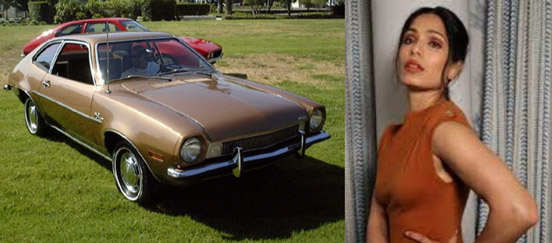
It’s worth noting that politics occasionally gives us inspirational stories too. How can you not be inspired by Zohran Mamdani, the 34-year-old state assemblyman who came out of nowhere to become the overwhelming favorite in New York City’s mayoral race? When he announced his candidacy in October 2024, Mamdani was given as much chance of winning as a Ford Pinto competing in a beauty contest against Freida Pinto.
Why are inspirational stories important? Because they give us hope. They show us what’s possible if we work hard and keep striving toward a goal.
If a blind woman can swim across the English Channel, as Melanie Barratt did, it gives me hope that one day, with many hours of practice, I can swim all the way across my local public pool.
If a cancer survivor can climb to the top of Mount Everest, as Sean Swarner did, it gives me hope that one day, with many hours of training, I can climb to the top of my Honda minivan.
If a 48-year-old man with two prosthetic legs can complete a 26-mile marathon in just over 2 hours and 41 minutes, as Richard Whitehead did, it gives me hope that one day, with plenty of training, I can complete a marathon in just over 2 hours and 41 days.
Inspirational stories don’t just give us hope—they also help reduce our stress. That’s what a new study published in the Psychology of Popular Media, a publication of the American Psychological Association, suggests.
About 1,000 adults participated in the study and were randomly assigned to one of four groups. One group watched an inspiring video, no longer than five minutes, every day for five days. A second group meditated for a few minutes each day. A third group watched a few minutes of comedy, while the final group chose their own mobile media content.
The researchers found that people who watched the inspiring videos (including the story of the cancer survivor who climbed Mount Everest) felt more hopeful. “And that hope predicted lower stress over the next ten days,” study author Robin Nabi of University of California Santa Barbara told NPR.
Comparing the results from the first and second groups, the researchers found that watching inspiring videos was just as effective as meditation for creating hope and reducing stress.
“We were actually quite surprised at how similar the effects of the inspiring videos were to the group that meditated,” Nabi said.
What the study shows is that it’s important to choose wisely how you spend your time. If you don’t feel like meditating, do the next best thing: watch lots of football.
No, watch inspiring videos. Read inspiring stories. Listen to inspiring podcasts.
It’s hard work, but you can do it.