By Hiral Dholakia Dave
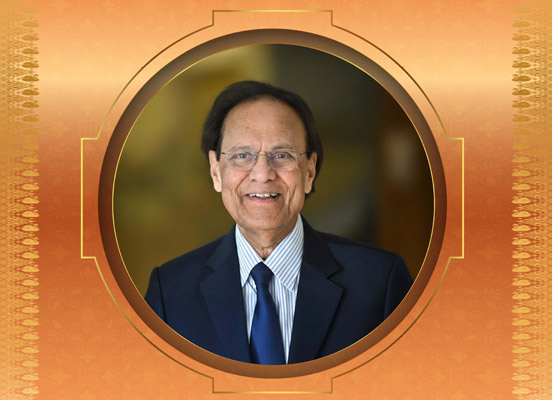
New York: Renowned radiation oncologist Dr Nori Dattatreyudu has been conferred the Padma Bhushan, India’s third-highest civilian honor, in recognition of his pioneering contributions to cancer research, treatment, and global healthcare collaboration. The award acknowledges his decades-long work in advancing radiation oncology and improving patient outcomes worldwide.
Speaking to The South Asian Times on the Padma Bhushan honor, Dr Nori described the recognition as deeply meaningful. “This is a wonderful recognition of my contribution to India and cancer centers in India. I have received several awards in the US, but this is very special since it is given by my motherland,” he said. “It is very important to me and challenging at the same time, because whenever you get an award, you want to continue to contribute more.”
He said he views the honor as an opportunity to intensify his efforts in cancer prevention and treatment. “I want to contribute to reducing the incidence of cancer and give a roadmap on how to do that. We need new methods of awareness, prevention, and to make treatment affordable and accessible. India has done many things in cancer care; my effort would be to help accelerate this progress,” he said.
Born into a Telugu family in Mantada village in Andhra Pradesh’s Krishna district, Dr Nori completed his medical education at Kurnool Medical College and later pursued postgraduate studies at Osmania Medical College before moving to the United States, where he built an illustrious career in oncology.
Highlighting gaps in India’s cancer care ecosystem, Dr Nori proposed what he called a “Panchamrut” - a five-point strategy to strengthen cancer awareness and infrastructure. The first step, he said, should be to make cancer a notifiable disease nationwide to generate accurate data and allocate resources effectively. “In the US, cancer has been a notifiable disease for years, while in India, only a handful of states have done so,” he noted.
The second recommendation is for each state to prepare a cancer atlas detailing incidence rates across districts and taluks, enabling local administrators to identify trends and allocate resources. Third, he proposed the creation of Command Control Centers for cancer to coordinate awareness, screening, and data collection, addressing the current lack of coordination among NGOs and healthcare agencies.
The fourth step is to include screening and preventive tests in public health schemes such as Aarogyasri, which currently cover treatment but not early detection. Finally, he called for expanding coverage to include advanced procedures such as robotic surgery, bone marrow transplant, and immunotherapy.
“These steps don’t demand huge investments but rewiring of efforts within the system,” Dr Nori told The South Asian Times.
On leveraging the Indian diaspora, he suggested that Command Control Centers could be linked with experts in the US and UK to support screening and prevention initiatives through technology. “Our diaspora members will be more than happy to do so,” he said.
Asked about the most urgent priority in global cancer care, Dr Nori emphasized awareness and early detection. “I will give a lot of importance to public awareness of cancer, followed by screening and early detection. Identify cases before they reach an advanced stage so that treatment becomes simple. Use traditional and advanced technology to enhance awareness and screening,” he said.
Dr Nori, a leading figure in cancer treatment and research for several decades, has served as the principal investigator for numerous clinical trials sponsored by the US National Cancer Institute and is widely recognized for his contributions to modern radiation oncology.
His contributions have earned him global recognition. In 2014, he received the Ellis Island Medal of Honor, one of the highest civilian awards in the United States, and in 2015, he was conferred the Padma Shri for his services to medicine. He has also been named among the top doctors in America by his peers, based on evaluations by tens of thousands of oncologists, particularly for his work in treating cancers affecting women.