By Lalit Garg
Chief Election Commissioner Gyanesh Kumar’s announcement to launch the Special Intensive Revision (SIR) of electoral rolls not only in Bihar but now across 12 states and union territories is indeed a commendable and courageous step toward correcting electoral irregularities and deficiencies. This initiative is not merely a technical or administrative process, but rather a decisive attempt to strengthen the very roots of Indian democracy. The soul of democracy resides in the impartiality and transparency of its electoral system, and the Election Commission’s latest move must be seen as a concrete, positive, and essential effort in this direction.
The Commission has clarified that while the Aadhaar card will not be accepted as proof of birth, citizenship, or residence, it can still be used as a supporting document during SIR. The chosen documents must be those accessible to the largest section of society, and Aadhaar today serves as the simplest form of identity proof. The accuracy, transparency, and fairness of the voter list form the spine of democracy. In a vast and diverse nation like India, ensuring the precision of electoral rolls is a major challenge. Therefore, periodic Special Intensive Revisions are essential.
Due to migration for employment, millions of people settle in new places permanently, while in many cases, the names of deceased persons remain in the list, and new eligible voters are not included. This leads to distortions in voter turnout and raises doubts about the credibility of election outcomes. The purpose of SIR is not to decide citizenship or exclude voters, but to simplify and encourage voter registration, inspiring citizens to participate in the festival of democracy. If implemented honestly at the ground level, this initiative will enhance both the sanctity of the voter list and the dignity of democracy.
For a democracy as vast as India’s, the cooperation of political parties is vital. They should view this process positively rather than through the narrow lens of political interest. The health of democracy depends on whether all parties can rise above political gain or loss and uphold transparency. The opposition should welcome this initiative, cooperate in its fair implementation, and avoid sowing doubt and distrust. Political parties have a serious responsibility—not merely to criticize, but to participate constructively. Similarly, civil society organizations must also stay vigilant; their involvement can help local election officers (BLOs) make the process more accurate and efficient.
The Election Commission, which dreams of holding simultaneous elections across the nation, must first succeed in executing this primary responsibility effectively. In the digital age, electoral reforms are no longer merely a question of manpower or administrative will but also of technological transparency. Measures like biometric verification, online registration, and data cross-verification have become indispensable. The Special Intensive Revision serves as the foundation for such reforms — cleansing and reorganizing electoral data. India’s election process is recognized as the largest democratic exercise in the world, but this glory is meaningful only when there remains no doubt about the purity of the voter list, impartiality of polling, and adherence to the Model Code of Conduct.
This initiative by the Election Commission is a significant step in that direction. Democracy is not merely the counting of votes—it is the counting of trust, and that trust rests upon the integrity, transparency, and vigilance of the Election Commission. Under Section 21 of the Representation of the People Act, 1950, the Election Commission holds the constitutional authority to prepare and revise electoral rolls. Ensuring accurate voter lists is not just a right but a constitutional necessity for free and fair elections.
Ironically, some political parties that complain of errors in voter lists are the same ones opposing their correction. Their protests during Bihar’s SIR, alleging “vote theft,” even reached the Supreme Court, but neither the Court nor the people of Bihar supported their baseless propaganda. Gyanesh Kumar’s initiative, therefore, represents more than a technical correction — it is a renewal of democratic culture. Elections are not merely about a change of power but about the test of public trust. If this campaign is carried out with honesty and citizen participation, it will make Indian democracy more mature, credible, and participatory.
The responsibility now lies not only with the Election Commission but also with every citizen and political party to support this reformative initiative and help keep the festival of democracy pure and unblemished. Chief Election Commissioner Gyanesh Kumar’s SIR initiative is not just a technical reform but a message of democratic renewal. Elections are not merely a contest for power — they are the mirror of public faith. If implemented with sincerity and citizen involvement, this initiative will strengthen the foundations of democracy and preserve the purity of the electoral process.
---------------------------------------------------------
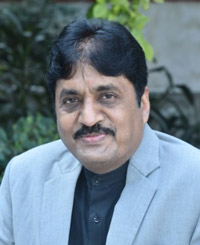
(Lalit Garg is a New Delhi-based journalist and columnist. The views expressed are his own.