Examining America’s legacy at 250, an Indian strategic thinker delivers a balanced verdict on a contradictory republic whose profound philosophical, scientific, and geopolitical contributions undeniably shaped the modern world order.
By Maj Gen Sudhakar Jee, VSM (Retd)
When 13 embattled colonies along the eastern seaboard of North America declared their independence from the British Crown on July 4, 1776, few among the crowned heads of Europe believed the experiment would last a generation.
Two-and-a-half centuries later, the United States of America stands not merely as a survivor but as the most consequential republic in recorded history – a nation whose contributions to human civilization have been as vast and varied as they have been, at times, profoundly contradictory.
This author writes not as an uncritical admirer of American power, nor as a detractor blind ed by its excesses. Writing from the perspective of an Indian strategic thinker – from a civilization that has experienced both the burdens of colonialism and the benefits of American strategic partnership – the verdict is unmistakable: no other nation in the modern era has shaped the world’s trajectory quite so decisively.
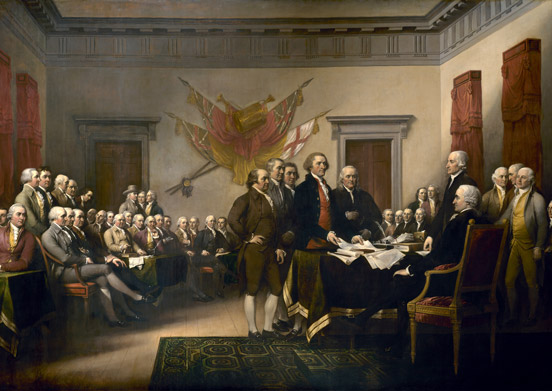
America’s first and perhaps most enduring contribution was philosophical. The Declaration of Independence gave the world a vocabulary for self-determination that transcended the thirteen colonies. The assertion that all men are created equal, endowed with unalienable rights – to life, liberty, and the pursuit of happiness – was radical political scripture.
These words animated subsequent revolutions in France, Latin America, and eventually the anti-colonial movements in Asia and Africa. India’s own struggle for independence drew, selectively and critically, from the American experience.
The US Constitution of 1787 and the Bill of Rights codified a system of government built on separation of powers, individual rights, and judicial review that has since become the template for constitutional democracies across the globe.
The founding fathers were not saints, and their republic was built on the uncomfortable coexistence of liberty and slavery. But the framework they constructed carried within it the seeds of its own correction – a republic capable, however slowly and painfully, of expanding the circle of its founding promise.
The 20th century was America’s great testing ground. The American expeditionary forces helped turn the tide in Europe in 1917. President Wilson’s Fourteen Points, though frustrated at Versailles, introduced the principle of national self-determination into the grammar of international relations and planted the seed of what would become the United Nations.
The Second World War was America’s defining moment. By Pearl Harbor in December 1941, Britain stood battered and exhausted; the Soviet Union was haemorrhaging on the eastern front; China was in the grip of brutal Japanese occupation. The industrial mobilization that followed was without precedent: American factories produced, at their wartime peak, a ship a day and an air-craft every few minutes.
The “arsenal of democracy” supplied not just American forces but also kept Allied armies in the field. What followed the victory was equally remarkable. Rather than extract reparations – the catastrophic error of Versailles that had fertilized Nazism – America chose reconstruction. The Marshall Plan channelled over $12 billion toward rebuilding Western Europe, consolidating its democracies in the process.
Japan, too, was rebuilt under American guidance into one of the world’s great industrial democracies. No victorious power in history had ever done anything quite like it. The postwar international order was, at its core, an American construction. NATO secured Western Europe. The US-Japan alliance stabilized the Indo-Pacific. The Bretton Woods system established the dollar as the world’s reserve currency and created the architecture of global trade and finance that, whatever its inequities, lifted hundreds of millions out of poverty across the developing world.
The doctrine of extended deterrence gave smaller states the confidence to invest in economic development rather than in arms races. America’s contributions to science and technology have been staggering. The Wright brothers flew the first controlled, sustained, and powered aircraft in 1903. Six decades later, American astronauts walked on the Moon – a milestone for the human species.
American universities have drawn the brightest minds from India, China, Iran, Nigeria, and beyond, producing knowledge that has benefited all of humanity.
The green revolution, which saved hundreds of millions from famine, including in India, was developed in large part through American agricultural science.
American institutions drove breakthroughs in cancer treatment, HIV/AIDS, and cardiovascular disease. The development of the mRNA platform, deployed during the Covid-19 pandemic, was the fruit of decades of federally funded basic research.
No single American contribution to the modern world is more pervasive than the internet. Born from a Defense Advanced Research Projects Agency project in the late 1960s, it was commercialized and globalized by American ingenuity in the 1990s, reshaping every dimension of human activity. Silicon Valley produced the microchip, personal computer, smartphone, and platforms that now connect four billion people.
The GPS system – the backbone of modern navigation, logistics, and precision military operations worldwide – is an American public good provided free of charge to the entire world. That a device in a farmer’s hand in Bihar or a fisherman’s boat off Kochi can pinpoint its location to within metres is an American gift to human productivity that is rarely acknowledged as such.
An honest essay cannot elide America’s failures and contradictions. The same nation that liberated Europe also overthrew elected governments in Iran, Guatemala, and Chile. It prosecuted a catastrophic war in Vietnam. It invaded Iraq on false pretences, destabilizing a region that continues to bleed.
Its own democracy has shown, in recent years, deeply troubling fractures. The ideals enshrined in 1776 have been honoured as often in the breach as in the observance.
And yet the republic has survived. It has self-corrected before, under great pain and at great cost. The abolition of slavery, the civil rights movement, and the expansion of the franchise each represented the republic bending, in Lincoln’s phrase, toward the better angels of its nature.
As America approaches July 4, the poser is not whether it has been a perfect power – no great power has been – but whether the world would have been better without it. The answer, on balance, is no. A world without American intervention in the two world wars would likely have been a world under authoritarian dominion. A world without American science would have been sicker, hungrier, and more isolated. A world without the internet and GPS would be narrower, slower, and less connected.
India and America have not always seen eye to eye. Through the Cold War, Washington tilted toward Islamabad; New Delhi tilted toward Moscow. But the 21st century has brought a strategic convergence rooted in shared democratic values, complementary economies, and a common wariness of Chinese hegemony. This partnership is itself one measure of what America, at its best, continues to offer: not imperial domination, but a rules-based order in which a civilization as ancient and as proud as India’s can find both space and partnership.
Two hundred and fifty years is not long by the measure of civilizations. America is still a young republic – still working out its contradictions, still debating its purpose, still arguing about what it owes the world and what the world owes it. That argument, conducted loudly and in public, is itself one of America’s contributions: the insistence that power must answer to scrutiny, that governance must earn consent, and that no republic, however powerful, is exempt from accountability.
That idea, too, travelled the world. And the world is better for it.
-------------------------------------
.jpg)
Maj Gen Sudhakar Jee is a former Colonel of the Mahar Regiment who served in the Indian Army for over 37 years. He is a Distinguished Fellow at the Centre for Land Warfare Studies (CLAWS)