By Vipul Tamhane
On my recent trip to Kashmir, as I stood on the porch of my houseboat on the Dal Lake, the sun casting a golden hue over the water, I was struck by the juxtaposition of Kashmir’s breathtaking beauty and the palpable unprecedented peace that lingers in the air. The region, often referred to as "Paradise on Earth", had been a flashpoint of conflict since the partition of British India in 1947. The historical context of this conflict is essential to understanding the current political landscape. The princely state of Jammu and Kashmir, with its majority Muslim population, acceded to India under contentious circumstances, igniting wars and ongoing tensions.
The 1947-48 war resulted in the division of the region, with Pakistan controlling a portion so called "Azad Jammu and Kashmir", while India retained the larger part, including the Kashmir Valley. In the decades that followed, Kashmir experienced significant political unrest, particularly during the late 1980s when allegations of electoral fraud led to widespread protests and the rise of an armed insurgency. The Indian government's heavy-handed response back then, including military crackdowns and human rights abuses, further fueled resentment among the local population.
Today, Kashmir remains heavily militarized, with over 800,000 Indian troops deployed to maintain control. The Indian government's actions have been ever criticized citing violations of international law, exacerbating the humanitarian crisis in the region. As I wandered through the picturesque valleys and bustling markets of Kashmir, the contrast between the region's natural beauty and its underlying tensions became strikingly clear. In the old market of Lal Chowk, the military presence was unmistakable. Soldiers from the Indian Army patrolled key areas, their vigilant eyes scanning for any signs of unrest. Nearby, the Central Reserve Police Force (CRPF) stood ready, guns and shields in hand, prepared for any sudden eruptions.
The Border Security Force (BSF) was stationed at strategic points, ensuring the Line of Control remained secure. I noticed the Sashastra Seema Bal (SSB) coordinating with local Jammu and Kashmir Police, fostering a sense of community safety. Above, helicopters from the Indian Air Force (IAF) occasionally hovered, a reminder of heightened security. Despite the charged atmosphere, tourists and street vendors thrived, creating a scene of resilience.
A decade ago, such a vibrant crowd at the Ghanta Ghar (Clock Tower) would have seemed unimaginable. Metaphorically, like its traditional hand-knotted carpet called ‘Kal baffi’, resembles the social fabric of Kashmiri life woven intricately with resilience and rich cultural heritage. With divisions deepening along political and religious lines, the ongoing conflict for decades had strained community relations, which now seems to be normalizing, at least to my outsider eyes. Education and healthcare systems were under strain, now gaining momentum with the inclusion of Kashmiri youth into mainstream India, which is being actively supported by the Center, the Ministry of Education, and the Ministry of Childcare and Youth Affairs and organizations viz Kashmir Education Initiative (KEI), Chinar International, and the relentless Aseem Foundation formed and operated by Sarang Gosavi, to help many young people with education who are feeling disillusioned and turning to militancy as a means of expressing their frustrations.
These programs work through targeted educational programs, scholarships, and vocational training, these ministries and institutions are ensuring that Kashmiri youth have access to quality education and opportunities. Initiatives like mentorship programs and cultural exchange are fostering a sense of belonging and integration, empowering the youth to contribute positively to the nation’s growth. These agencies and organizations collaborate institutions viz University of Kashmir (KU), Srinagar, NIT Srinagar, University of Jammu, IIT & IIM Jammu, etc with the ones in other states in India, bring about the change needed in the education scene of the valley.
Conversations with locals in Kashmir unveil a political landscape transformed over the past two decades. The Bharatiya Janata Party (BJP)-led National Democratic Alliance (NDA) represents a stark shift from the Congress-led United Progressive Alliance (UPA) era. Under the UPA from 2004 to 2014, Kashmir saw a dual approach of engagement and development, with initiatives like the Prime Minister’s Reconstruction Plan aimed at revitalizing the economy. However, rising violence and terrorism marred this period, leaving many disillusioned. In contrast, the NDA, which took power in 2014, adopted a hardline stance focused on national security and aggressive military operations
against militants.
The abrogation of Article 370 in August 2019 marked a watershed moment, fostering a sense of inclusion and the release of civil liberties. While some Kashmiris felt alienated under previous administrations, the NDA's emphasis on assimilation has led to noticeable changes in socio-economic conditions, leaving a complex legacy that continues to shape their lives today. The economic conditions of Kashmiris have seen significant changes from the era of the United Progressive Alliance (UPA) to the Bharatiya Janata Party (BJP) administrations. Under the UPA from 2004 to 2014, initiatives like the Prime Minister’s Reconstruction Plan aimed to revitalize the region by improving infrastructure, education, and healthcare. While there was some investment in local industries and tourism, persistent violence and political instability hindered sustainable growth, leaving many Kashmiris grappling with poverty and unemployment.
When the BJP administration took over in 2014, it adopted a more comprehensive approach, prioritizing both security and economic development. The abrogation of Article 370 in 2019 aimed to integrate Kashmir more amply into India, but it also raised concerns about economic disruption. Despite a heavy military presence and communication monitoring, which initially aimed to encourage tourism and local businesses, many Kashmiris faced increased economic hardships and limited opportunities for growth.
Since 2014, the government has emphasized infrastructure projects and initiatives like the "Prime Minister's Development Package", targeting sectors such as tourism, agriculture, and handicrafts. While there are signs of potential growth, ongoing security concerns and political tensions continue to pose significant obstacles, leaving many Kashmiris cautiously optimistic about their economic future.
As I talked with people, I came across a few who still have families in Pakistan-occupied Kashmir (PoK). Their sentiments towards the progressive developments in Indian-administered Kashmir are complex and multifaceted. Many report that the Kashmiris in the PoK region observe the economic growth and infrastructural advancements in India with a mix of admiration and skepticism. They see the investments in tourism, agriculture, and technology as a potential model for their own development, yet they remain acutely aware of the political and social changes that accompany such progress. The narratives often reflect a longing for similar opportunities, as many in PoK feel marginalized and deprived of the benefits that come with economic growth.
There is a sense of frustration over the lack of development in their own region, which contrasts sharply with the advancements seen across the Line of Control (LoC). Rationally, the sentiments are intertwined with a deep-rooted desire for self-determination and autonomy. While some express hope for a similar change in the PoK, others fear that it may never come their way with the depleting conditions and political instability in Pakistan. The Kashmiri people in PoK grapple with a complex interplay of hope, envy, and a yearning for a future, where they too can experience the benefits of development and peace, or maybe one day be a part of the same region as a whole, underscoring the true meaning of “Azad (Free/Peaceful) Kashmir”.
As I concluded my journey through this beautiful yet complex land, I was left with a profound sense of the resilience of the Kashmiri people. Their aspirations for political prowess, growth, and progress are not just dreams; they are a testament to their enduring spirit and hope for a brighter future. The path in the past was fraught with challenges, but with the progressive nation on their side, the desire for sustaining peace, prosperity, and self-determination remains a powerful force that continues to shape the narrative of modern-day Kashmir.
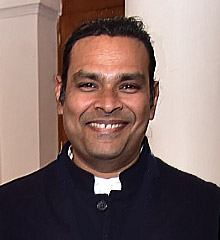
(The writer is a counter-terrorism expert and a visiting faculty with Pune University (SPPU) at the Department of Defense and Strategic Studies. He is also the founder & editor-in-chief at Diplomacy Direct, a public interest think-tank. He can be contacted at [email protected])