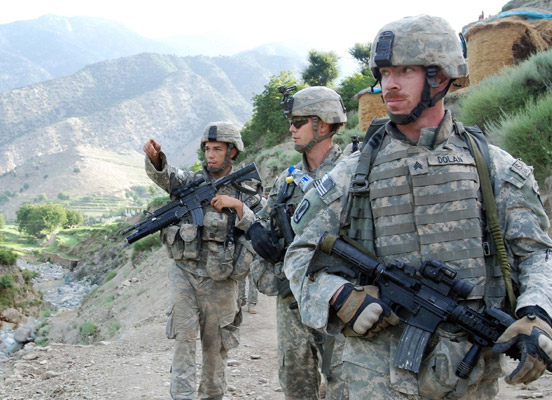
Despite the significant efforts made by American presidents to counter global terrorism, many have faced criticism for failing to deliver on their commitments and promises.
By Vipul Tamhane
History looks at the American presidents with a question mark, with the presidential tall talks with regards to global counter terrorism efforts. Though American presidents have historically taken significant steps to counter global terrorism, particularly in response to evolving threats. Following the September 11, 2001 attacks, President George W Bush launched the War on Terror, initiating military operations in Afghanistan to dismantle Al-Qaeda and remove the Taliban.
This era saw the establishment of the Department of Homeland Security in 2003, aimed at coordinating national security efforts and enhancing intelligence sharing. President Barack Obama shifted the focus towards a more nuanced approach, emphasizing diplomacy and international coalitions. His administration conducted targeted drone strikes and surgical operations against terrorist leaders, culminating in the successful operation that killed Osama bin Laden in 2011.
Under President Donald Trump, the US intensified military efforts against ISIS, declaring its territorial defeat in 2019. Trump also implemented a controversial travel ban on several Muslim-majority countries, citing national security concerns. President Joe Biden emphasized a diplomatic strategy, focusing on international partnerships and addressing the root causes of extremism. His administration oversaw the end of a two-decade military presence in Afghanistan.
These actions reflect the ongoing evolution of US counter-terrorism strategies in a complex global landscape. Despite the significant efforts made by American presidents to counter global terrorism, many have faced criticism for failing to deliver on their commitments and promises. After the September 11 attacks, President George W Bush vowed to eradicate terrorism, yet the prolonged military engagements in Iraq and Afghanistan led to a quagmire, with rising insurgencies and instability in the region.
The initial promise of a swift victory morphed into a two-decade conflict, raising questions about the effectiveness of US strategies. President Barack Obama pledged to end the wars and shift focus to countering violent extremism through diplomacy and partnerships. However, the rise of ISIS during his tenure highlighted the limitations of this approach, as the group gained territory and influence, challenging the narrative of success. Under President Donald Trump’s first term, the promise to decisively defeat ISIS was met with military successes, yet his administration's travel ban and withdrawal from international agreements drew criticism for fostering division and failing to address the root causes of extremism.
Withdrawal from Afghanistan in 2021, by President Joe Biden, while fulfilling a long-standing commitment, was marred by chaos and the rapid resurgence of the Taliban, leaving many to question the long-term effectiveness of US counter-terrorism efforts. These failures underscore the complexities and challenges inherent in combating global terrorism. During his 2016 presidential campaign, Donald Trump positioned himself as a strong opponent of global terrorism, emphasizing a tough stance against groups like ISIS. He criticized the Obama administration's approach, arguing that it was ineffective and led to the rise of terrorist organizations.
Trump advocated for a more aggressive military strategy, including increased airstrikes and a commitment to defeating ISIS, which he described as a top priority. As the 45th president, Trump continued to focus on global terrorism, often highlighting his administration's efforts to dismantle ISIS. He celebrated the military's successes, including the territorial defeat of ISIS in Iraq and Syria. However, his approach also included controversial policies, such as the travel ban targeting several predominantly Muslim countries, which he argued was essential for preventing terrorism.
Trump's rhetoric often emphasized the need for "America First" policies, prioritizing national security and border control. Throughout his presidency, he maintained a combative tone towards terrorism, framing it as a critical issue that required unwavering resolve and decisive action from the US government. Now with his re-election as the US President, there is a new hope for the global counter terrorism efforts beaconed by the USA.
Donald Trump's second term has introduced a re-calibrated and aggressive strategy for combating global terrorism, driven by key cabinet appointments. Tulsi Gabbard, as Director of National Intelligence, aims to reshape intelligence priorities through controversial yet pragmatic partnerships. Her history of engaging with leaders like Bashar Al Assad raises questions but also reflects a willingness to explore unconventional strategies. Gabbard’s focus on intelligence-sharing with allies like India marks a shift toward targeting terrorist networks in South Asia, leveraging local expertise to disrupt threats at their roots.
Pete Hegseth, the Secretary of Defense, champions an "America First" philosophy, advocating for increased military engagement against terrorist organizations. His approach prioritizes US national security by directing resources toward immediate threats and emphasizing joint operations with allies like India. Secretary of State Marco Rubio complements these efforts with a proactive diplomatic stance, focusing on countering Iranian influence and addressing extremism's root causes through economic aid and political reforms.
Together, this trio embodies a comprehensive strategy to redefine global counter-terrorism efforts. In the second term, Donald Trump is expected to adopt a multifaceted approach to counter global terrorism, focusing on specific regions that have been hotbeds of extremist activity. Trump's administration is expected to intensify military support for Israel and negotiate peace agreements to address the Palestinian issue, pushing for a demilitarized Palestinian state under Israeli security.
In Asia, Trump is expected to take a hardline stance against terrorism from China, using economic sanctions and military alliances with Japan and the Philippines. The Trump administration will also be observed on its posture with USA’s friendly neighbor Canada to resolve the harboring of Khalistani extremists, using their soil to plot against India’s national security interests. Also, working towards extradition of known listed terrorists present in the USA currently.
In Europe, Trump may strengthen ties with populist leaders who share his views on immigration and security, promoting a narrative that emphasizes national sovereignty. This approach may involve supporting measures to limit the influx of refugees, reducing the risk of terrorism. In Africa, Trump may focus on countering extremist groups like Boko Haram and Al-Shabaab through increased military aid and economic investments.
The administration's strategy is expected to balance military action with diplomatic efforts, focusing on both immediate threats and long-term solutions. It is expected to prioritize intelligence sharing and collaboration with international partners to enhance global counter-terrorism efforts. The administration may push for legislative measures to combat domestic terrorism, reflecting a broader definition of terrorism that includes both international and homegrown threats.
Indian Prime Minister Narendra Modi’s hard stance on terrorism also resonates with Trump’s resolve. During Donald Trump’s first term, US-India counter-terrorism collaboration reached new heights, reinforcing a strategic alliance to combat regional and global threats. Joint military exercises like Yudh Abhyas and Tiger Triumph enhanced interoperability, focusing on counter-insurgency and disaster response. Intelligence-sharing targeted cross-border terrorism, especially dismantling Pakistan-based networks, while diplomatic efforts saw key terrorist groups sanctioned, reflecting aligned security priorities. In this term the two friendly leaders have yet another to expand further with a more assertive US counter-terrorism strategy.
Enhanced intelligence-sharing will prioritize disrupting terrorist financing and preempting threats in South Asia. Joint military drills are expected to intensify, emphasizing urban warfare and counter-terrorism operations. Diplomatically, both nations will aim to consolidate regional coalitions, addressing extremist ideologies and promoting stability. The US-India collaboration, strengthened by shared goals and complementary strengths, remains pivotal in addressing evolving security challenges, solidifying their role as key players in global counter-terrorism efforts.
The global alliance on counter-terrorism hopes that President Trump's second term will emphasize a multi-faceted approach to counter global terrorism, combining military action, intelligence collaboration, and diplomatic engagement. Trump's second term is expected to reflect a blend of military action, diplomatic efforts, and economic strategies aimed at curbing terrorism while reinforcing US influence globally.
-------------------------
(The writer is a counter-terrorism expert and a visiting faculty with Pune University (SPPU) at the Department of Defense and Strategic Studies. He is also the founder & editor-in-chief at Diplomacy Direct, a public interest think-tank. He can be contacted at [email protected])