Love for the Motherland is an affair of the heart—it is about memory, food, music, and roots. Allegiance to America is an affair of the conscience—it is about duty, civic participation, and the protection of the democracy that allows us to thrive.
By Parveen Chopra
As the calendar turns toward July 2026, the United States stands on the precipice of a monumental milestone: the Semiquincentennial. For two and a half centuries, the American experiment has evolved, stumbled, and soared, driven by a Constitution that remains the envy of the free world. For the Indian American community—now one of the most affluent, educated, and influential demographics in the country—this anniversary is not just a federal holiday. It is a moment of reckoning.
We have mastered the American Dream. We have conquered the boardrooms of Silicon Valley, the wards of prestigious hospitals, and (in a small measure) the halls of political power. Yet, as we prepare to celebrate America’s 250th birthday, an uncomfortable question lingers in the air: Why is it that we paint the streets orange, white, and green every August with thunderous enthusiasm, yet remain so quiet when the Fourth of July rolls around?
“My story is proof of the power of the American Dream... Only in America is that possible. I’m running to ensure that every family—regardless of how many letters are in their last name—has the chance to succeed.”
- Congressman Raja Krishnamoorthi
-------------------------------------------
The architecture of allegiance
There is a profound difference between heritage and home. India is our motherland—the source of our values, our spirituality, and the cultural DNA that makes our community so resilient. To love India is natural; it is a debt of gratitude to the soil that nurtured our ancestors.
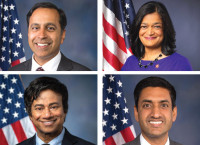
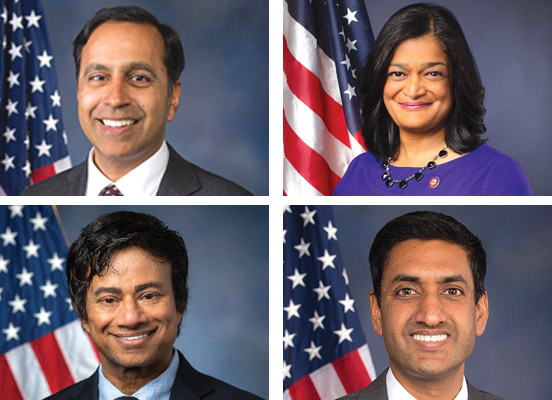
However, for the vast majority of us, America is no longer a "transit lounge." It is the land where we have built our lives, buried our elders, and birthed our children. Congressman Raja Krishnamoorthi from Illinois, who moved to the US as an infant, often reflects on this unique trajectory:
"My story is proof of the power of the American Dream... Only in America is that possible. I'm running to ensure that every family—regardless of how many letters are in their last name—has the chance to succeed."
When we took the oath of citizenship, we didn’t just sign a document to ease travel; we made a solemn vow to "renounce and abjure" old allegiances in favor of a new one. As the country reaches the 250-year mark, we must ask ourselves if our participation in the American story is merely transactional or truly transformational. Do we only value America for the prosperity it provides, or do we value it for the principles it upholds?
“I realized that because I had the protection of citizenship, I had a moral obligation to speak out. I had to... it’s not just about what we look like and checking a box, but the perspective that we bring.”
- Congresswoman Pramila Jayapal
-------------------------------------------
Patriotism does not force either/or choice
A common hesitation within the Indian diaspora is the fear that embracing American patriotism somehow dilutes our "Indian-ness." This is a fallacy. Congresswoman Pramila Jayapal emphasizes that our immigrant background is actually our greatest strength in serving our new home:
"I realized that because I had the protection of citizenship, I had a moral obligation to speak out. I had to... it's not just about what we look like and checking a box, but the perspective that we bring."
The beauty of the American tapestry is that it is woven from threads of different origins.
Love for the Motherland is an affair of the heart—it is about memory, food, music, and roots.
Allegiance to America is an affair of the conscience—it is about duty, civic participation, and the protection of the democracy that allows us to thrive.
In the New York tri-state area, we see massive parades for India’s Independence Day. We see many events and gatherings to celebrate Republic Day. These are beautiful displays of cultural pride. But where is that same collective energy on the Fourth of July? To celebrate the "Spirit of 1776" with the same fervor we bring to the "Swaraj" movement is not a betrayal of our roots; it is the ultimate fulfillment of our journey as immigrants.
“We’ve got to be part of the mainstream. We’ve got to be part of politics... if we are not, then we will be on the menu. We need to continue to help this nation become even greater than what it is.”
- Congressman Shri Thanedar
-------------------------------------------
The 250th anniversary: A call to action
The upcoming 250th anniversary is the perfect catalyst for a shift in the Indian American psyche. We must move from the periphery of American civic life to its very center. Congressman Shri Thanedar warns that being "active" is no longer optional:
"We've got to be part of the mainstream. We've got to be part of politics... if we are not, then we will be on the menu. We need to continue to help this nation become even greater than what it is."
This transition requires more than just attending a local fireworks display; it requires visible, organized participation. It is time for our community organizations—from the temples of New Jersey to the cultural associations of Long Island—to lead the charge.
Organize Collective Celebrations: Let us see Indian Americans leading Fourth of July parades and hosting community events.
Display the Colors: Let the Stars and Stripes fly as prominently from our homes as the Tricolor does during festive seasons.
Civic Education: We must teach our youth that they are not "living in" America; they are America.
“We need to restore the idea that being American means helping build the next chapter of the country. That’s what active citizenship looks like. My parents said, ‘You won the lottery, you were born in America. Go work hard and contribute.’”
- Congressman Ro Khanna
-------------------------------------------
Securing the legacy for the next generation
If we continue to treat July 4 as a "long weekend" rather than a sacred civic duty, we risk raising a generation of children with divided hearts. Congressman Ro Khanna points out that for the next generation, being American is about active responsibility:
"We need to restore the idea that being American means helping build the next chapter of the country. That’s what active citizenship looks like. My parents said, 'You won the lottery, you were born in America. Go work hard and contribute.'"
By vocally and visibly celebrating 250 years of America, we provide our children with a clear sense of identity. We show them that they don't have to choose between their heritage and their country—but that their loyalty belongs to the nation that protects their future.
Conclusion: From residents to stakeholders
This July, as the fireworks illuminate the skylines of New York and Connecticut, let us reflect on the magnitude of the American journey. This nation has opened its doors to us with a generosity rarely seen in history. It has given us the freedom to practice our faith, the infrastructure to build our businesses, and the legal framework to demand equality.
We are no longer guests in this house. We are the owners. And as the United States celebrates its 250th year, the Indian American community must stand at the forefront.
Let us celebrate India with affection, but let us honor America with allegiance. Not with a whisper, but with a roar. Not because we have to, but because we are proud to be a part of the greatest democratic experiment in human history.
God Bless America!