By Akshat Jain
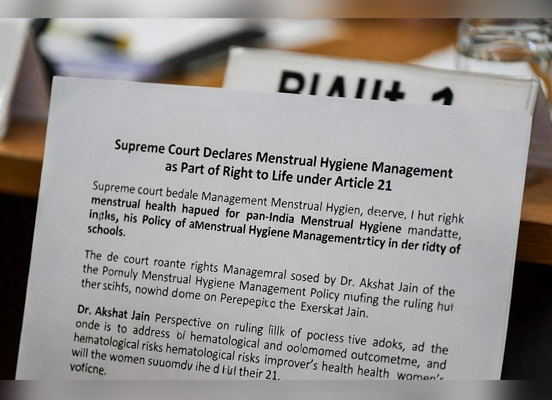
In a landmark ruling with far-reaching implications for gender equity, education, and public health, the Supreme Court of India on Thursday recognized the right to menstrual health as an integral component of the right to life and personal liberty under Article 21 of the Constitution.
A bench led by Justice J.B. Pardiwala directed the pan-India implementation of the Union Health Ministry’s Menstrual Hygiene Management (MHM) Policy for school-going girls in government and government-aided schools, specifically targeting students in Classes 6 to 12. The policy focuses on:
The judgment addresses critical barriers faced by adolescent girls, including school absenteeism, health complications, and dropouts linked to inadequate menstrual hygiene. Justice Pardiwala emphasized the constitutional dimensions:
“The right to life under Article 21 of the Constitution includes the right to menstrual health. Access to safe, effective, and affordable menstrual hygiene management measures helps a girl child attain the highest standard of sexual and reproductive health. The right to a healthy reproductive life embraces the right to access education and information about sexual health.”
He further highlighted equality under the Constitution:
“The right to equality is expressed through the right to participate on equal terms... equality of opportunity necessitates that everyone has a fair chance to acquire the skills necessary to access benefits.”
The ruling underscores that menstrual hygiene is essential to dignity, gender equity, and the full realization of rights to education and health. It extends beyond legal stakeholders to classrooms, teachers, parents, and society at large, aiming to normalize open dialogue and support for girls who face stigma around menstruation.
Hematologist Dr. Akshat Jain Welcomes Ruling as a “Superpower Step” for Women’s Health. Dr. Jain, whose work focuses on blood disorders including those exacerbated by menstrual blood loss. This is confidence building, infection reducing, bleed quantifying superpower step in the right direction
The public health outcome of this measure will have far reaching outcomes, and it aligns with the judgment’s emphasis on reproductive health education and access, underscoring how addressing menstrual hygiene can have measurable medical benefits beyond dignity and equity — particularly in preventing anemia, improving school attendance, and supporting long-term health outcomes for millions of girls. The Supreme Court’s directive is expected to accelerate nationwide rollout of the MHM policy, with significant potential to improve enrollment, retention, and overall well-being of adolescent girls in educational institutions across the country.