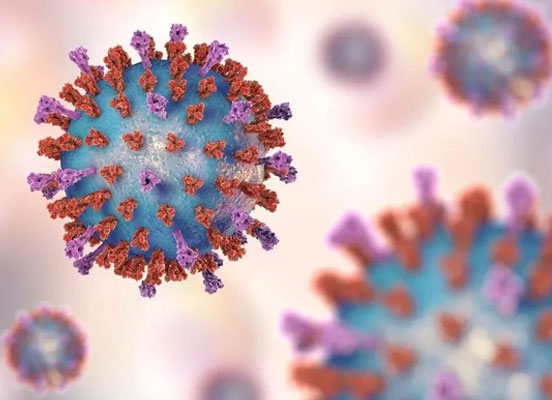
New Delhi: An international team of scientists has found compelling evidence that early-infancy infection with respiratory syncytial virus (RSV) significantly increases the risk of developing childhood asthma.
The risk is especially higher in children with a family history of allergy or asthma. The study, published in the Science Immunology journal, suggests that protecting newborns against RSV could substantially reduce asthma cases later in life.
"Childhood asthma is a complex disease with many contributing factors," said Professor Bart Lambrecht from VIB (the Flanders Institute for Biotechnology) and Ghent University in Belgium.
"We found that early-life RSV infection and genetic allergy risk interact in a very specific way that pushes the immune system toward asthma. The encouraging news is that this process can be prevented," Lambrecht added.
The team, including researchers from Denmark, combined population-wide health registry data from all Danish children and their parents with controlled laboratory experiments. They found that early viral infection and inherited allergy risk amplify one another.
Infants who experience severe RSV infections in the first months of life show an increased likelihood of immune cells overreacting to common allergens, such as house dust mites.
This effect is dramatically intensified when asthma or allergy runs in the family, as allergen-specific antibodies passed from parents to the newborn further heighten sensitivity.
Importantly, the team found that when newborns were protected from RSV in experimental models, these harmful immune shifts did not occur -- and asthma development was prevented.